Planning your first trip to the Canary Islands, and stuck between Gran Canaria and Tenerife? I had exactly the same question. Every guide said both had beaches, volcanoes and sunshine, so how do you choose?
So we didn’t choose. In June, we spent 9 days in Tenerife, then flew to Gran Canaria for 5 days. Visiting them in the same season and with the same travel style, gave me a much clearer picture of what makes each island different. No blurry memories from two different holidays.
And I was surprised by how different they felt, even though a ferry connects them in about 1h20. Tenerife’s best moment for me was a hike down into a village hanging between cliffs. Gran Canaria’s was a coffee farm hidden in a green valley.
My short answer is that if you can only visit one, choose Tenerife. It won me over with its volcanic landscapes, the best hikes I’ve done in the Canaries, and its charming northern towns. But Gran Canaria surprised me with its golden beaches, its mountain villages and some of my favourite moments of the whole trip. And for some travellers, it’s clearly the better choice.
In this guide, I compare them based on what we actually experienced: landscapes, beaches, hiking, weather, towns, food, hotels and getting around. I also tell you what might disappoint you on each island, and which one I’d recommend for your type of trip.

I’m Ersilia – architect and travel lover based in France
I help English-speaking travelers plan meaningful trips across Europe, mixing iconic sights with hidden gems and authentic local experiences, all based on places I’ve personally explored.
✨ Browse my Europe guides
✨ Or discover my France travel resources for deeper local insight
Want me to plan your trip? Details here
The quick answer
| My overall pick | Tenerife, if you have a week and love to explore |
| Pick Gran Canaria instead | If you have about 5 days, or beaches come first |
| With two weeks | Visit both |

What I learned by visiting both islands on the same trip
Visiting them back to back taught me things I wouldn’t have understood from seeing just one.
- Tenerife needs time. Gran Canaria rewards a short trip. Our 9 days in Tenerife felt too short. Our 5 days in Gran Canaria felt complete.
- Tenerife has one enormous highlight in Teide, alongside incredible hiking and northern landscapes. Gran Canaria surprised me more through a series of smaller experiences: a coffee farm, a banana plantation, colourful towns and the dunes.
- The “authentic north” isn’t the same on both islands. Tenerife’s north is greener and more dramatic. Gran Canaria’s north felt more traditional and less touristy.
- The south is where you sleep, not where you discover the island. On both, our best days happened far from our hotel.
- They create two different holidays. Tenerife was an active trip: early starts, long drives and entire days on the trails. Gran Canaria was a mix: a sunrise in the dunes, a pool afternoon, a village, an unusual visit, all in a shorter trip.
Gran Canaria vs Tenerife at a glance
| Tenerife | Gran Canaria | |
| Size | The largest Canary Island | Smaller and round, the third largest |
| Landscapes | Dramatic: Teide, lava fields, cliffs, green north | Varied: dunes, mountain villages, green valleys, pine forests |
| Beaches | Mostly black sand, some imported golden sand | Natural golden sand, and the Maspalomas Dunes |
| Highest point | Mount Teide, 3,715 m, the highest peak in Spain | Pico de las Nieves, about 1,950 m |
| Weather (our trip, June) | Sunny south, foggy and cool north | Sunny everywhere |
| Towns we visited | La Orotava, Garachico, Santa Cruz | Arucas, Gáldar, Vegueta, Puerto de Mogán, Tejeda |
| Our hotel | Boutique hotel in Costa Adeje | Huge resort in Meloneras |
| Our trip length | 9 days (and you could double that) | 5 days (but could be longer) |
Landscapes: Tenerife is more dramatic, Gran Canaria more varied
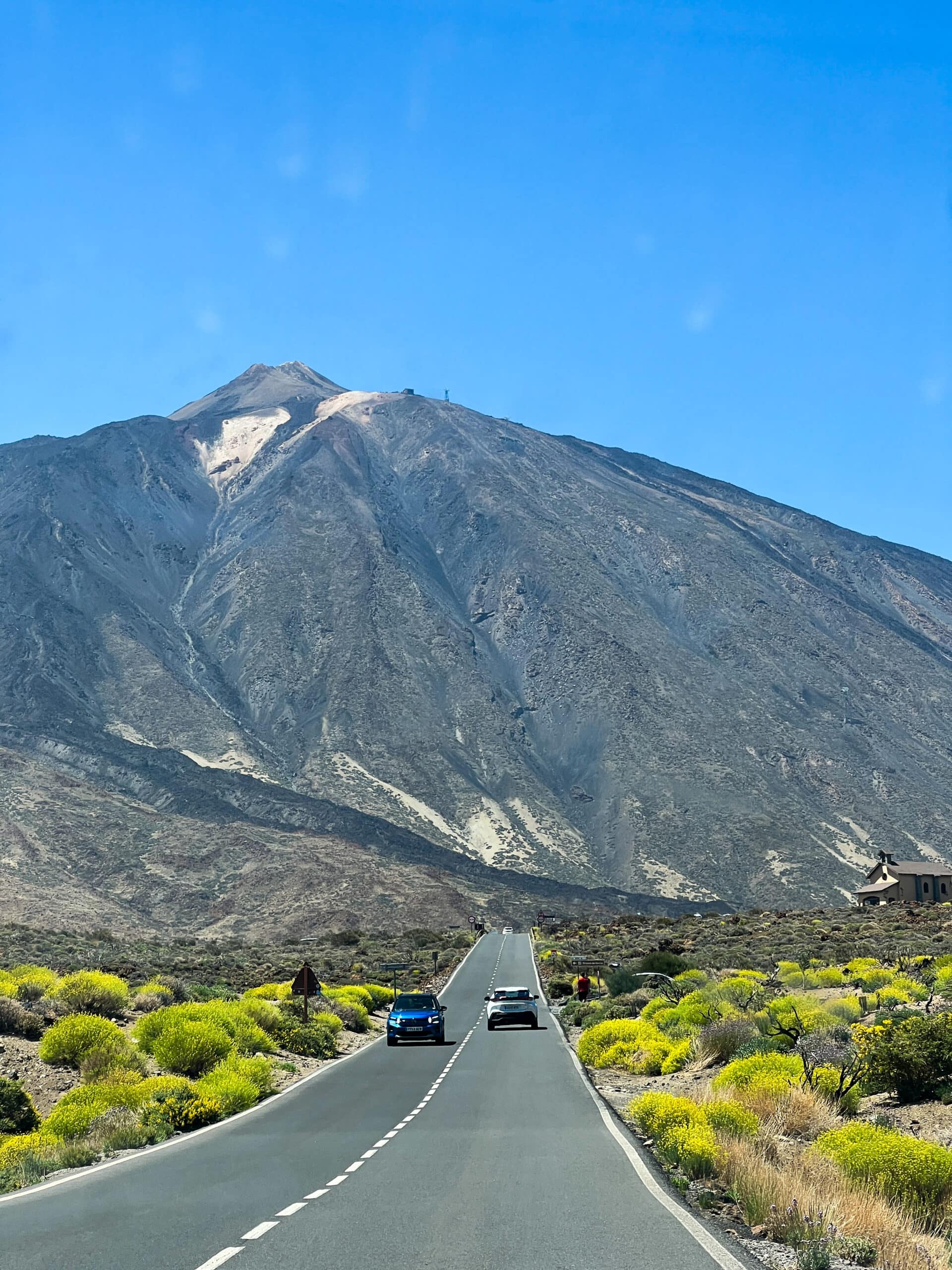
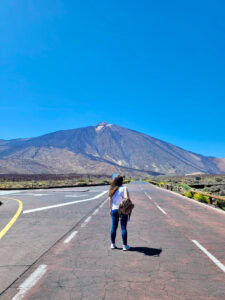
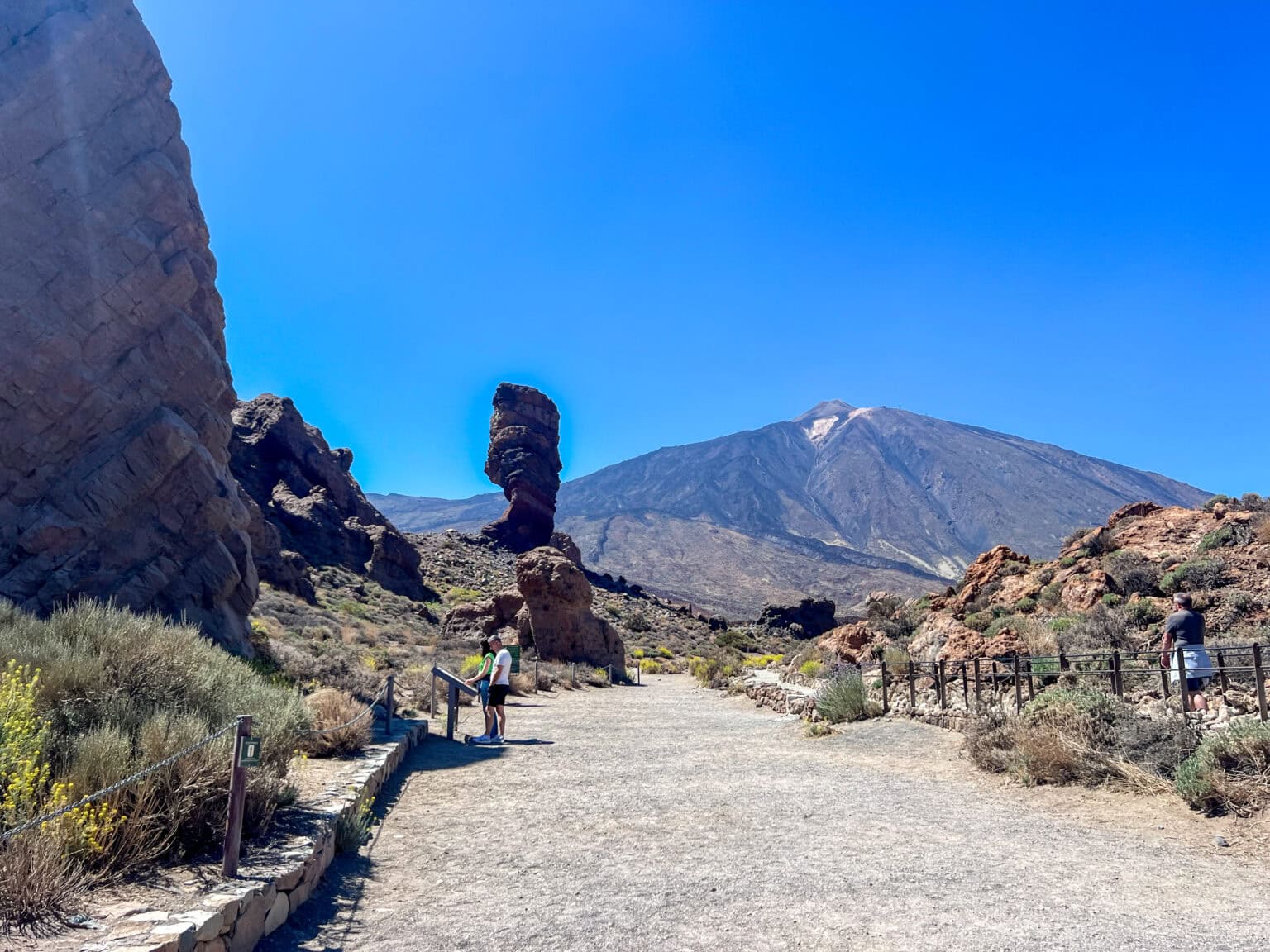
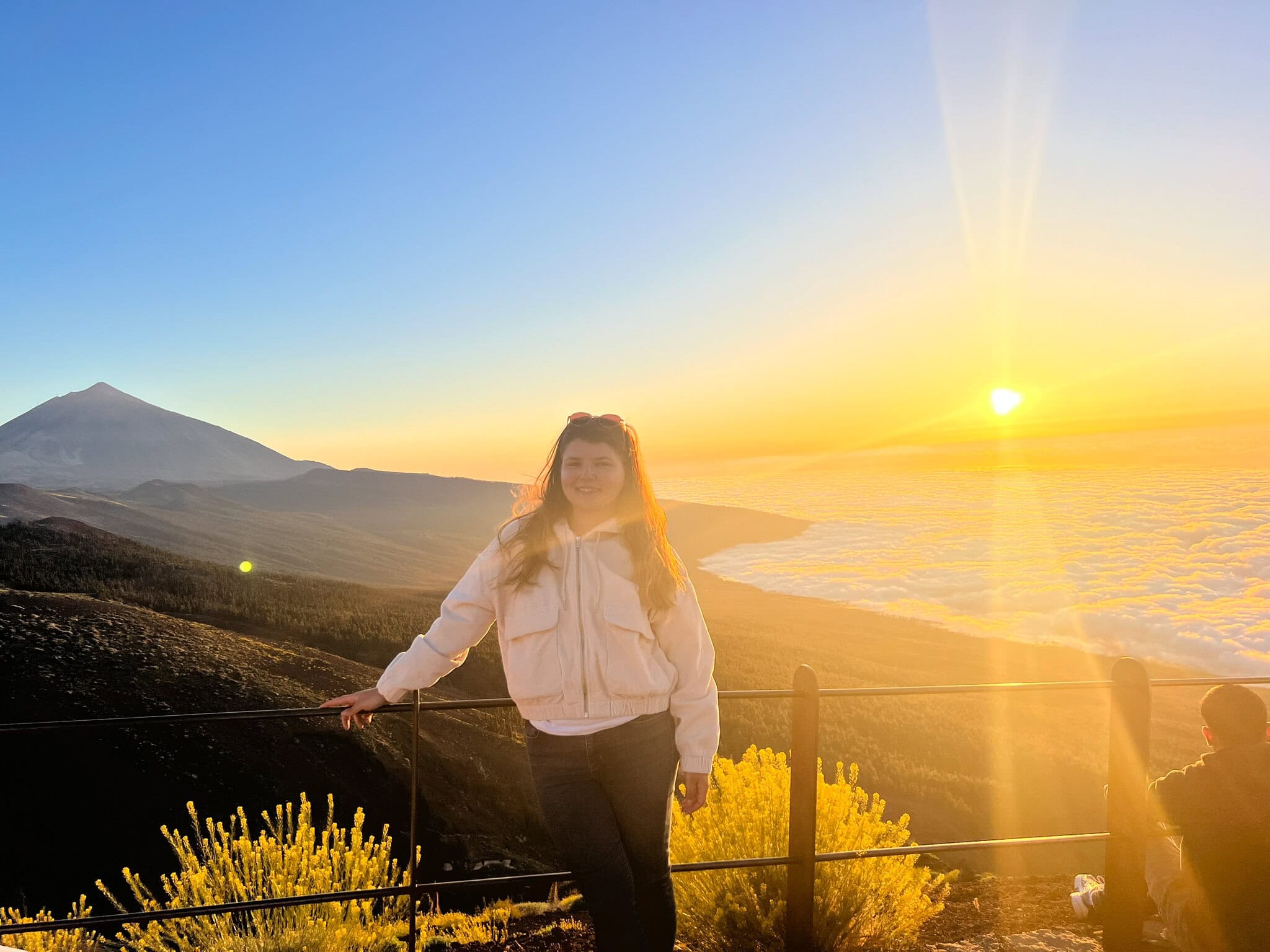
Driving into Teide National Park is something I’ll never forget. As you go up from the beach, the trees become taller and lighter in colour. Then, suddenly, the vegetation disappears completely, and you feel like you’re on Mars. Teide, at 3,715 m, is the highest peak in Spain, and you feel it.
Nothing in Gran Canaria gave me that same “wow, where am I?” feeling.
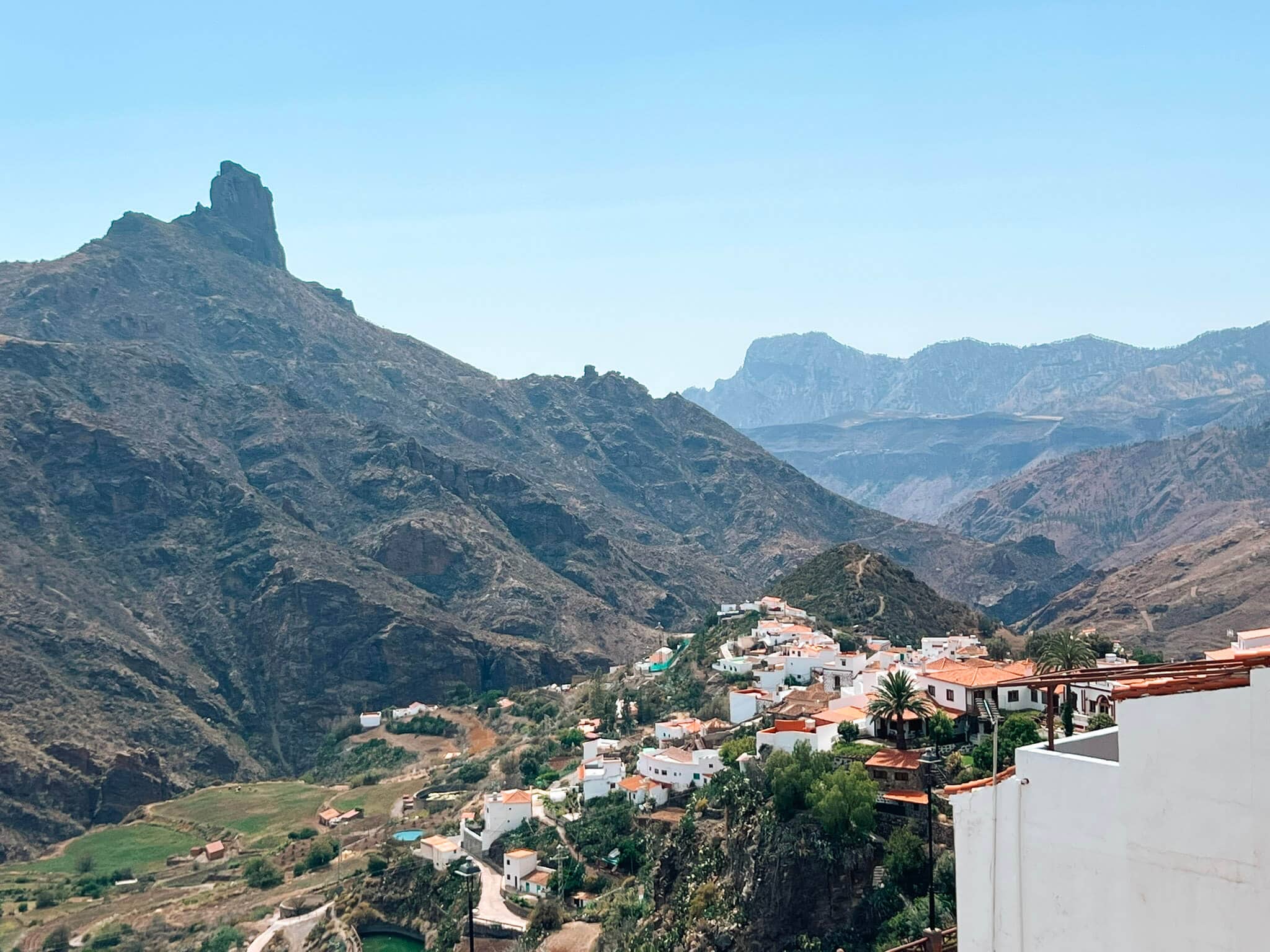
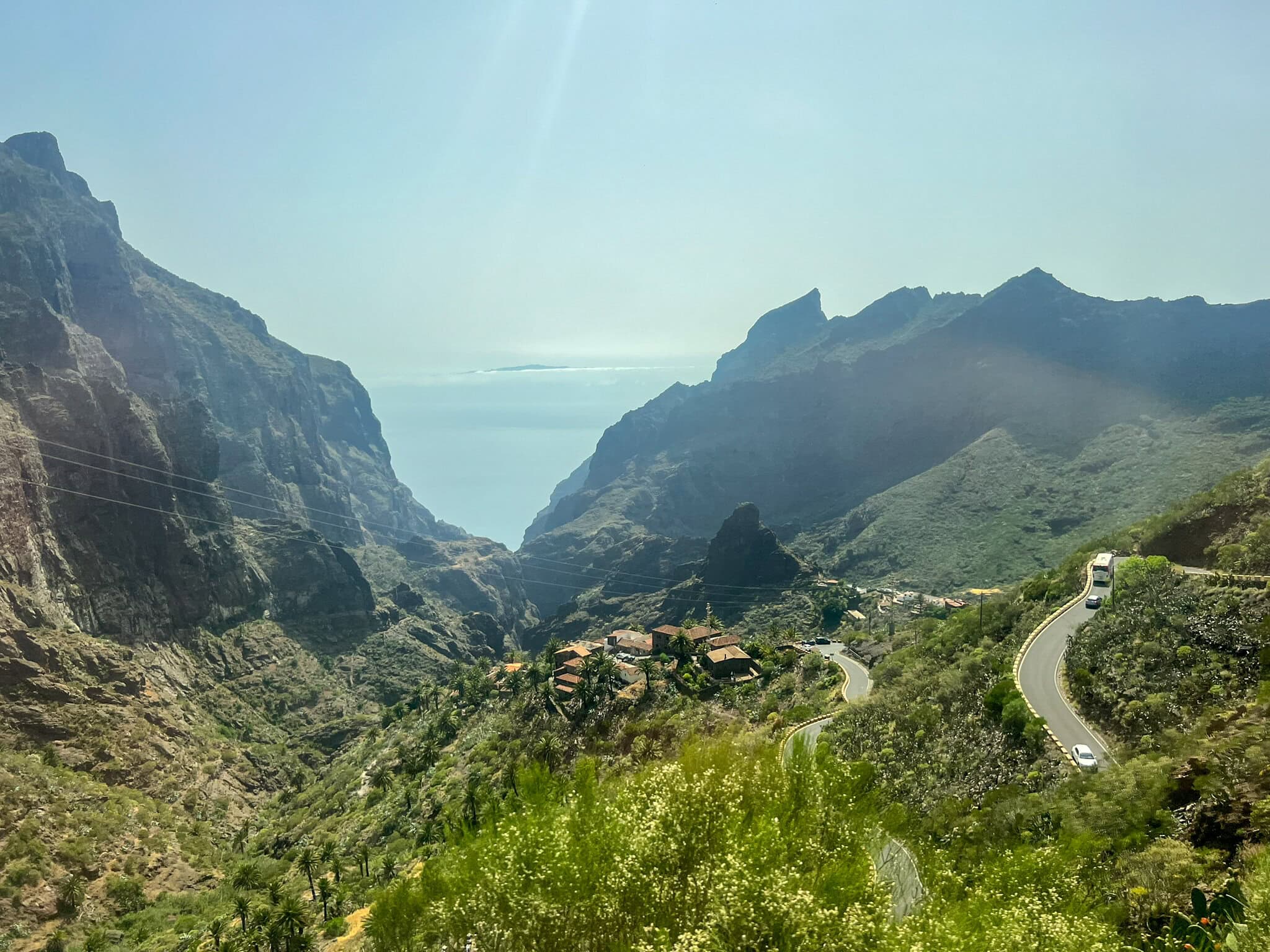
But Gran Canaria gave me something else: variety. On our third day, we watched the sunrise in the sand dunes, swam in the pool at lunch, and in the afternoon, we were in Tejeda, a white village surrounded by volcanic peaks and pine forests. It reminded me a lot of Masca in Tenerife. The next day, we were drinking coffee grown in the green Agaete Valley.
What this means for your trip: Tenerife gives you a few huge, unforgettable landscapes. Gran Canaria gives you many different ones, close together.
Beaches: Gran Canaria wins
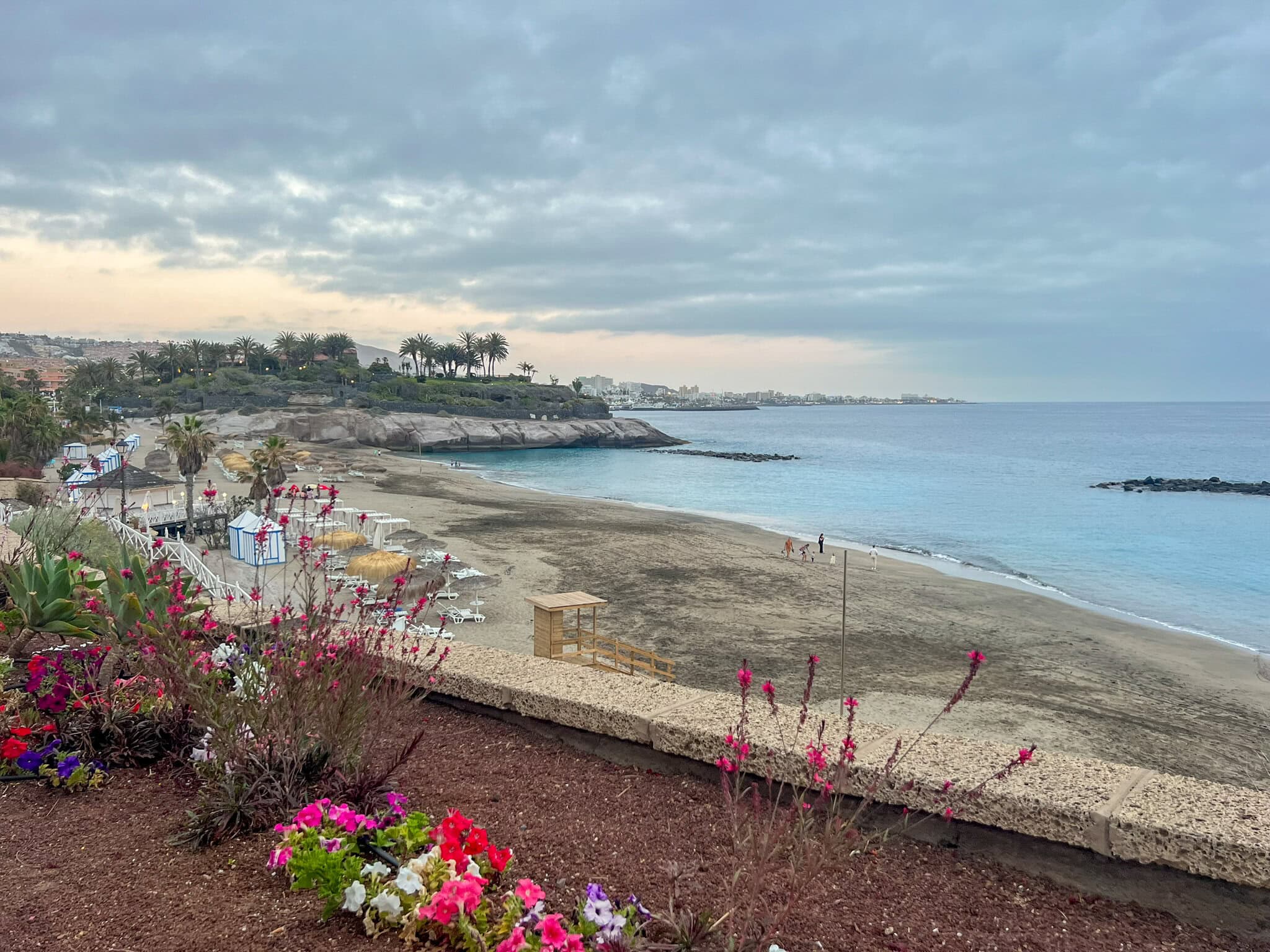
Most beaches in Tenerife are black sand. I was worried about that, after a black beach in Santorini that I didn’t love. Our first beach, Playa de Fañabé in Costa Adeje, was actually a pleasant surprise. But the golden beaches in Tenerife’s south use sand imported from Africa (yes, really).
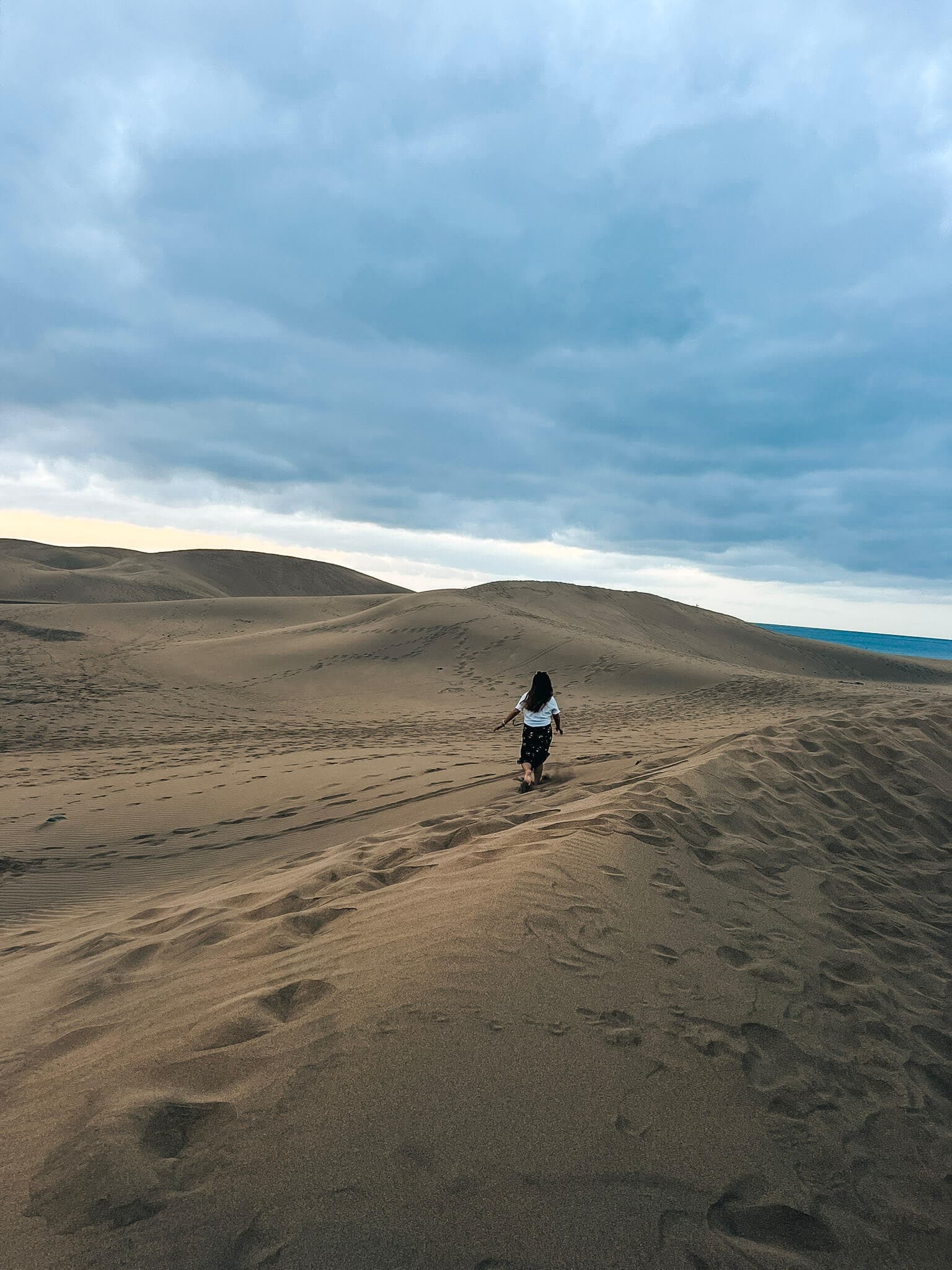
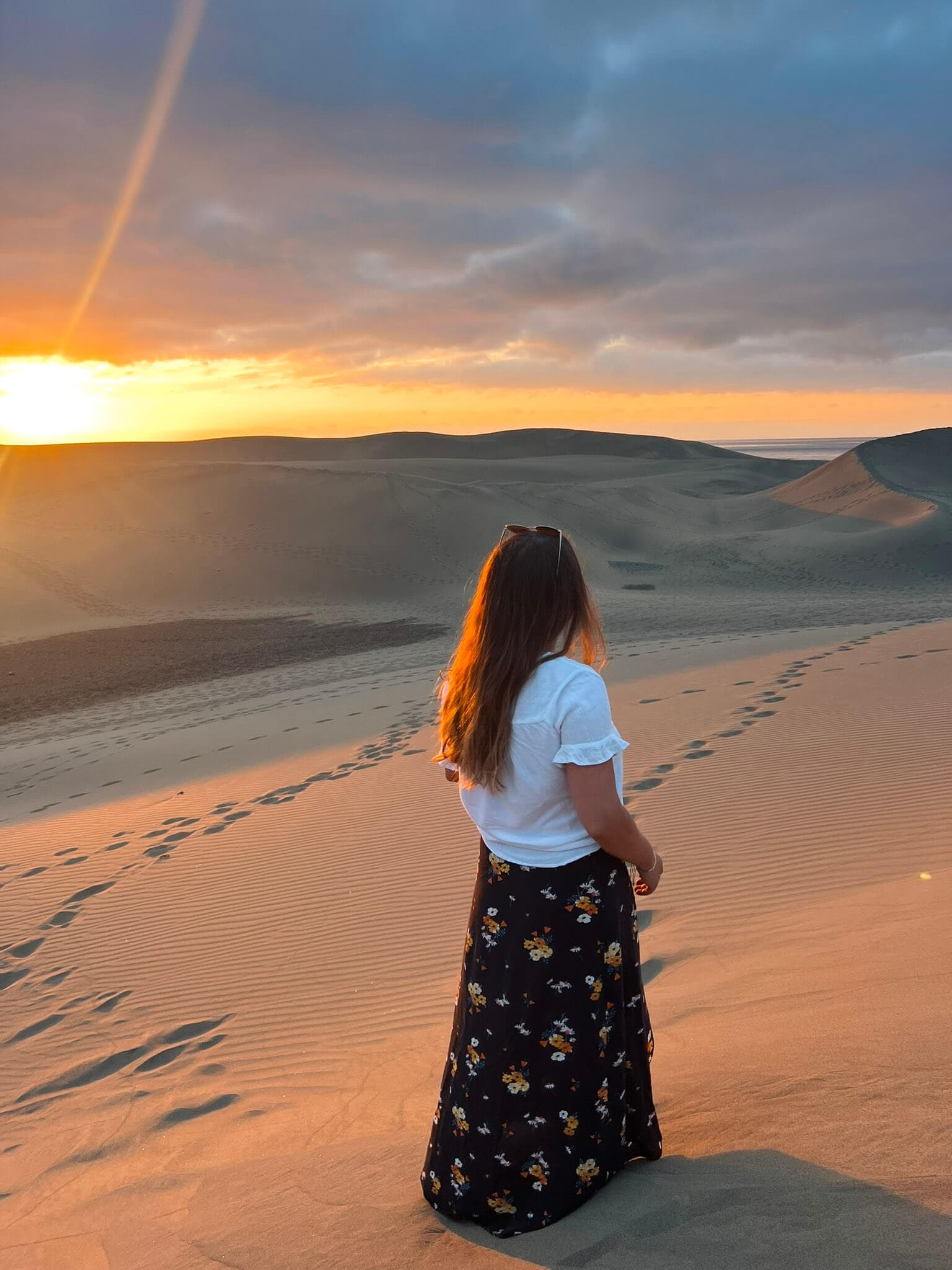
Gran Canaria has natural golden sand, and the Maspalomas Dunes. We got up before sunrise and walked into the dunes when there was almost no one. The sand turned orange and pink, and it was one of the best moments of our trip. Tip: go to the far end of the beach the evening before to find the path, because in the dark, everything looks the same.
My favourite beach was in Puerto de Mogán: smaller, sheltered, with the colourful houses right behind it.
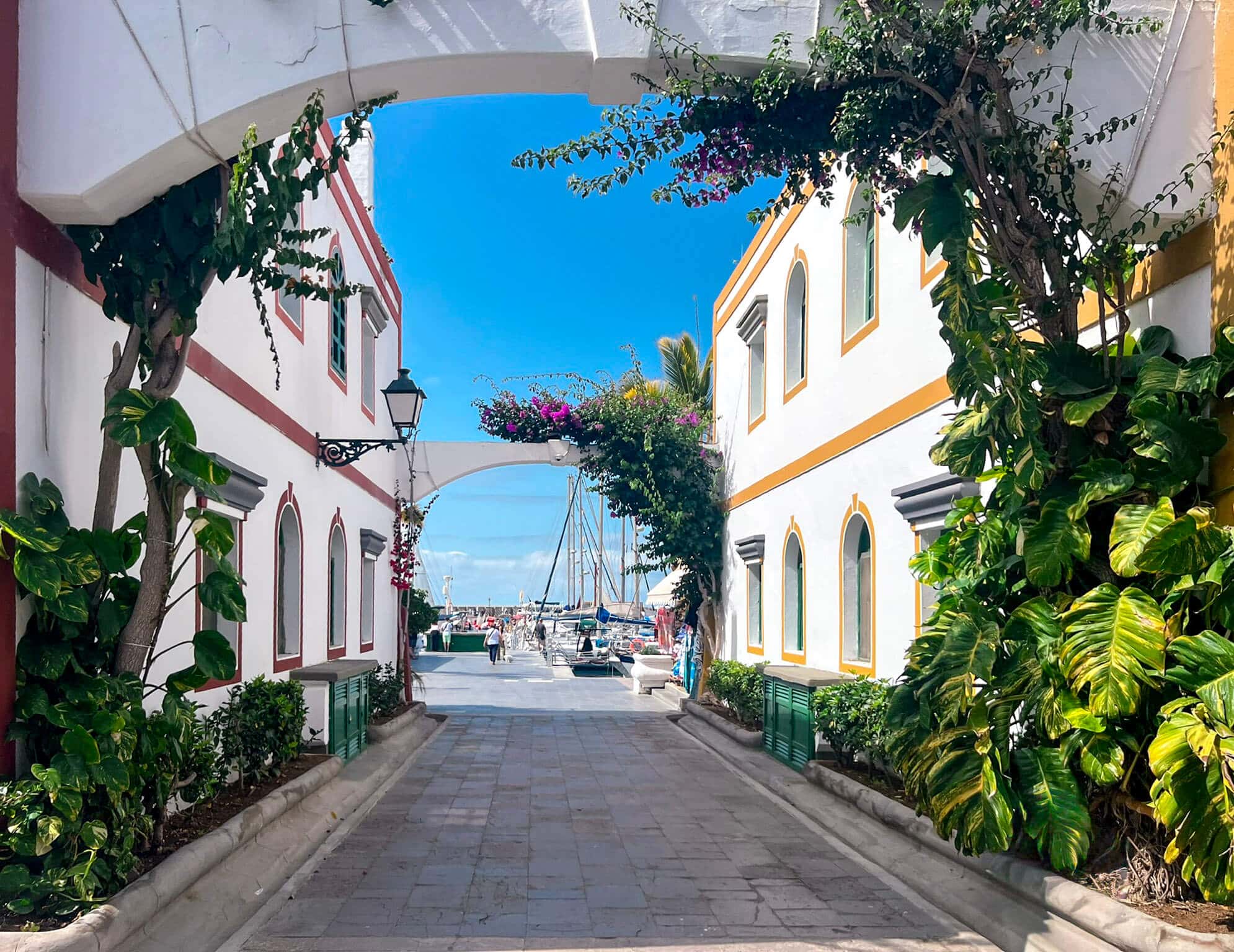
What this means for your trip: if you plan to spend most of your holiday on the beach, choose Gran Canaria. If beaches are just a break between excursions, Tenerife’s are more than fine.
Hiking: Tenerife wins, by far
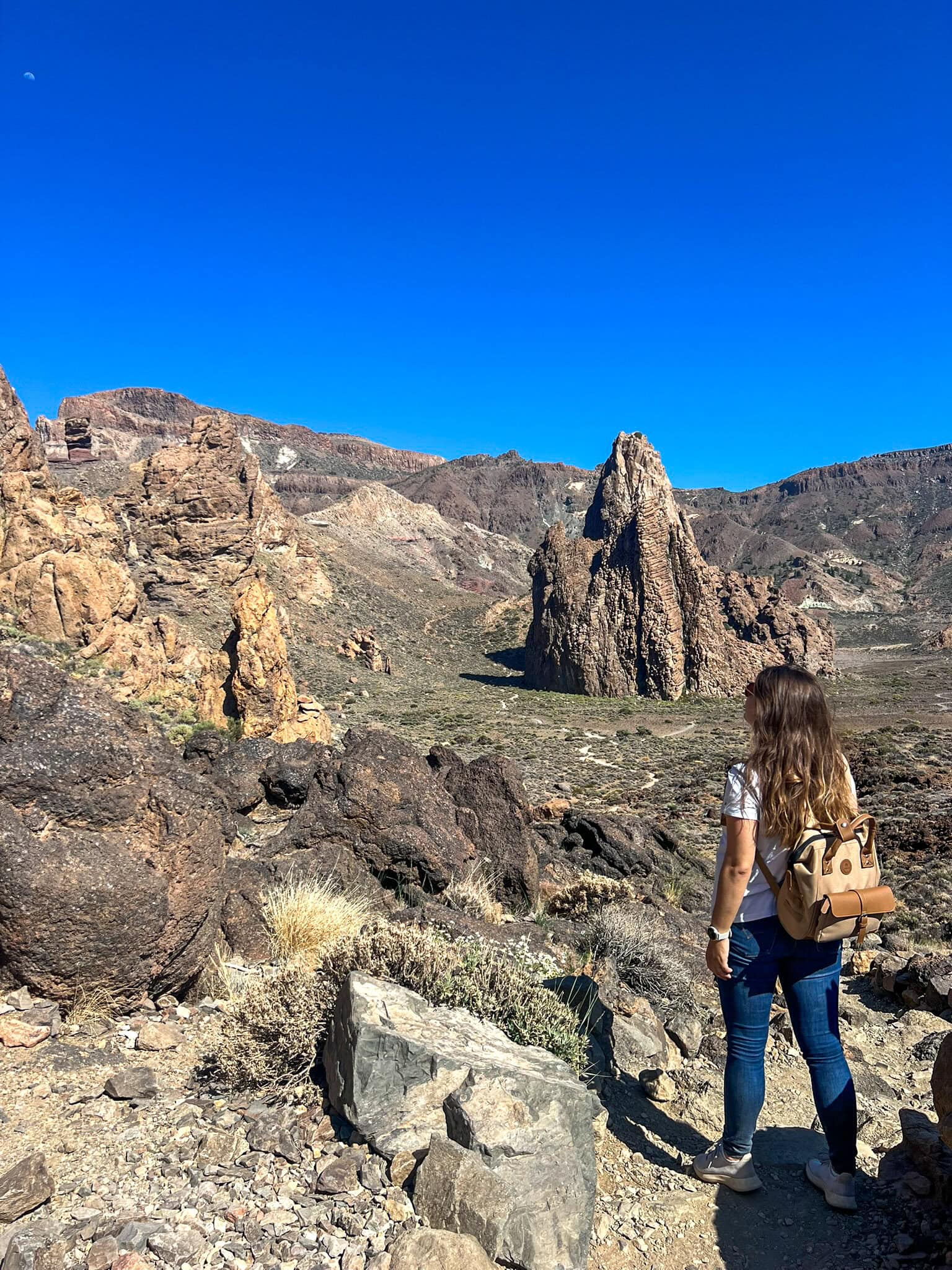
Hiking completely changed our Tenerife trip. We fit 4 hiking days into 9, and still wished we had more. We’re not expert hikers, and that’s exactly why it surprised me: the trails are so varied and spectacular.
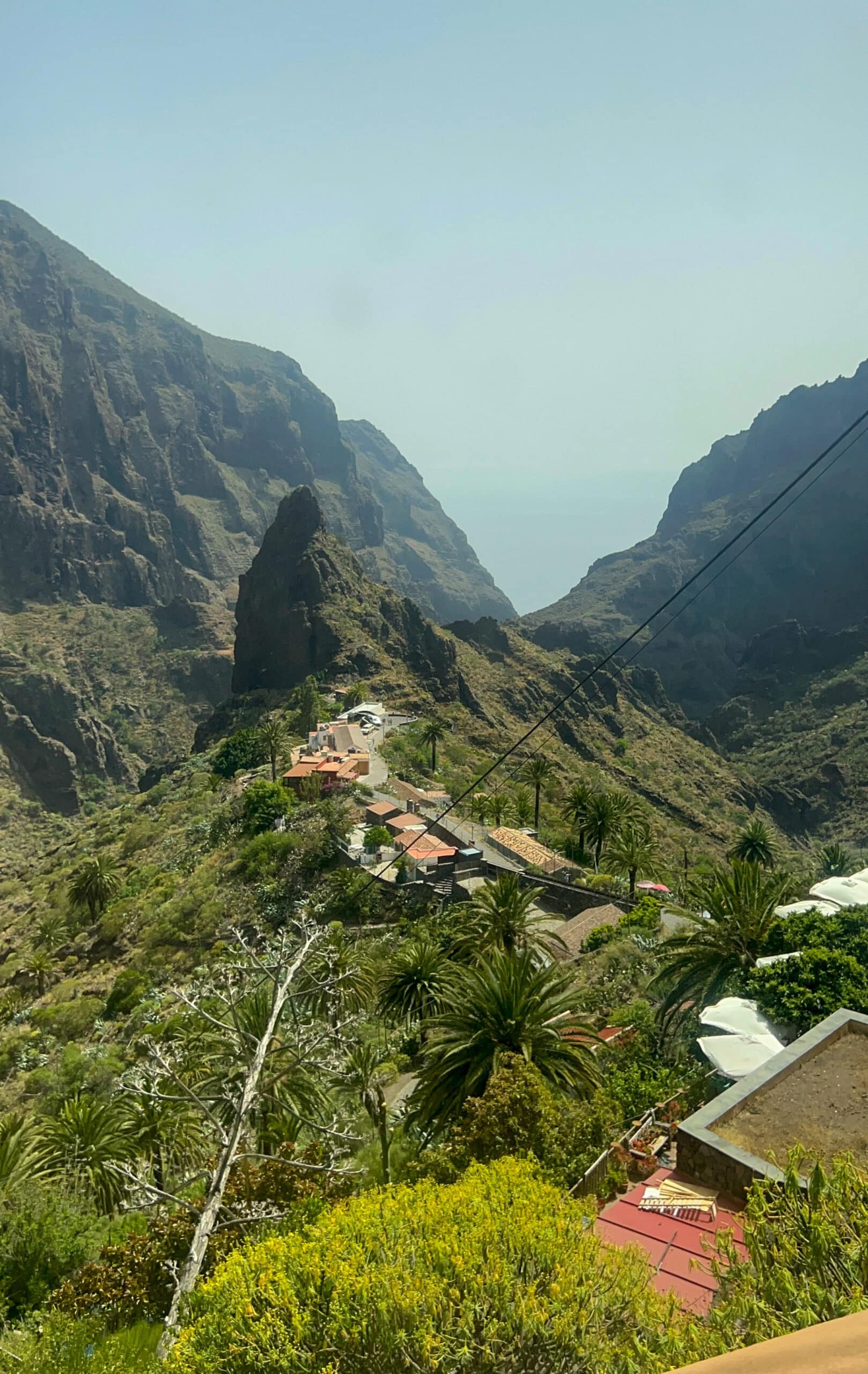
The one that made Tenerife stand out was the Masca trail. The last part, going down into Masca village, with steep cliffs on both sides and the village perched on the mountainside, was my favourite moment. Lesson learned: start as early as you can. We started late in the morning and regretted it: it was hotter, and Masca was crowded when we arrived.
All our favourites are in my best hikes in Tenerife for casual hikers.
In Gran Canaria, we didn’t really hike. With 5 days, we chose road trips, villages and experiences. The island has trails around the Roque Nublo and in the pine forests of Tamadaba, but I can’t compare them from my own experience.
What this means for your trip: hiking turns Tenerife into an active holiday, with early starts and whole days on the trails. If that sounds like you, Tenerife is the obvious choice.
Weather: what we actually had in June
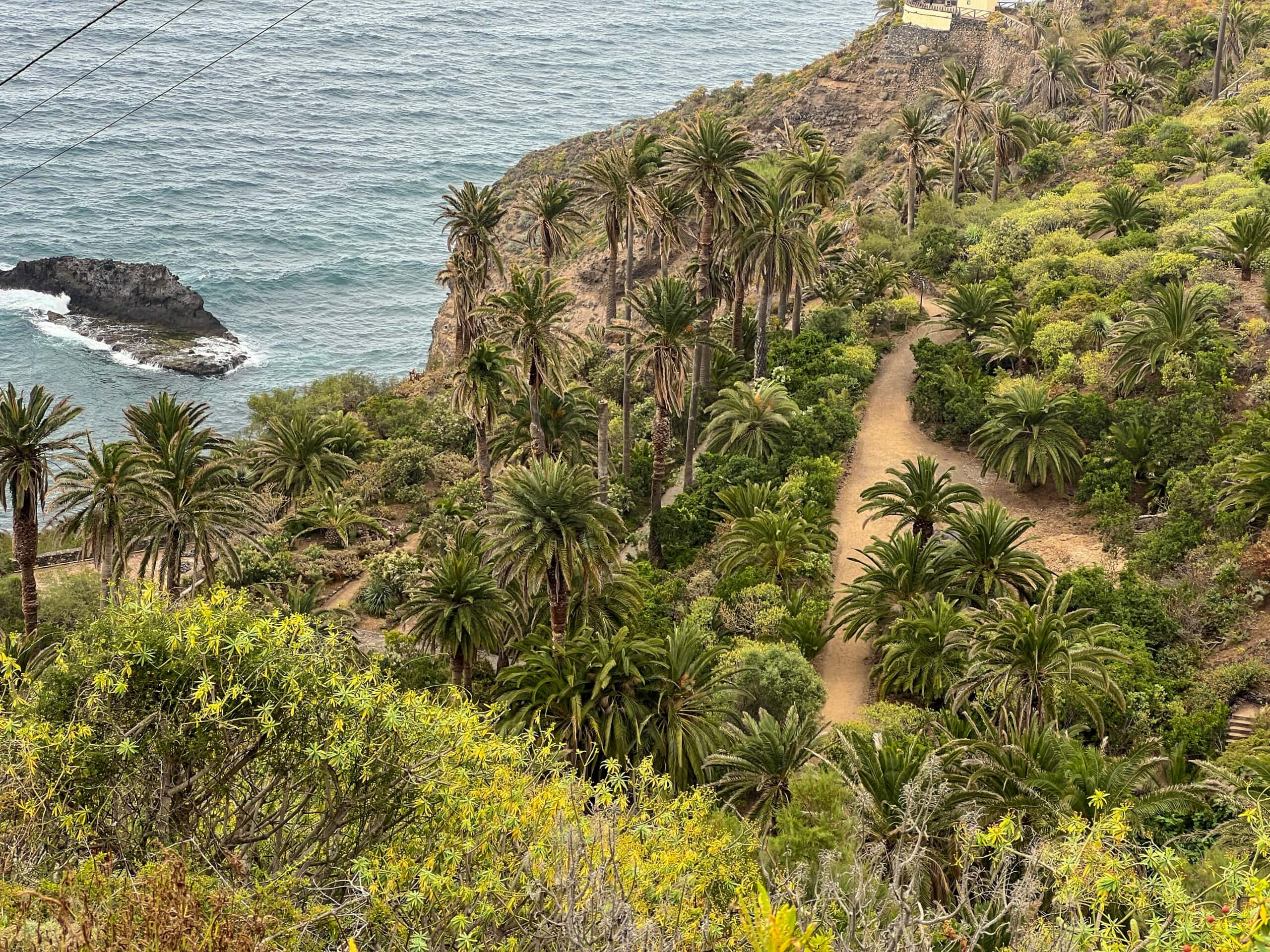
This is based on one trip, in June, so take it as our experience, not a forecast. If you’re planning a winter holiday, conditions can be different (cooler, and more chance of clouds and rain), so check the season before you decide on weather alone.
In Tenerife, the south was sunny every day: around 25°C in Costa Adeje. But the north was a different world. We’d leave a perfectly blue sky, and an hour later, drive into fog so thick we couldn’t see 10 metres ahead, at 15°C. Then the fog would lift, and La Orotava or the green valleys above Garachico would appear.

In Gran Canaria, we had sun everywhere, even in the north and in the mountains. The only clouds we saw were below us, during the stargazing tour.
What this means for your trip: in Tenerife, pack layers and plan your northern days with some flexibility. On both islands, bring a jacket for the mountains: it’s much colder than on the coast.
The north: Gran Canaria felt more traditional

On both islands, the north is the most authentic side. But they’re not the same.
Tenerife’s north is greener and more dramatic. I loved La Orotava, with its ochre and red Canarian houses and wooden balconies, and Garachico, by the sea. And it’s where you find the guachinches, the family-run restaurants with the best local food of the island.
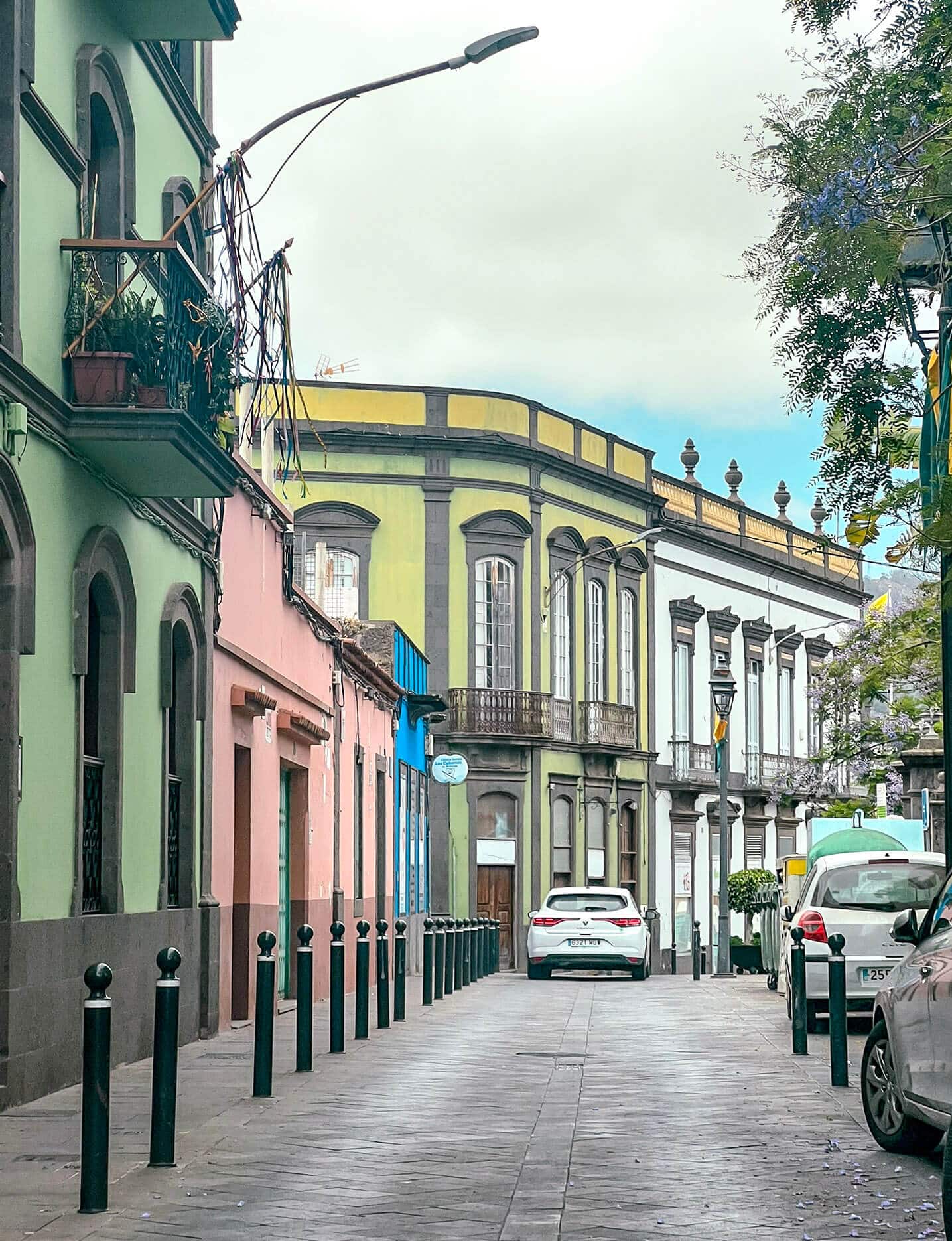
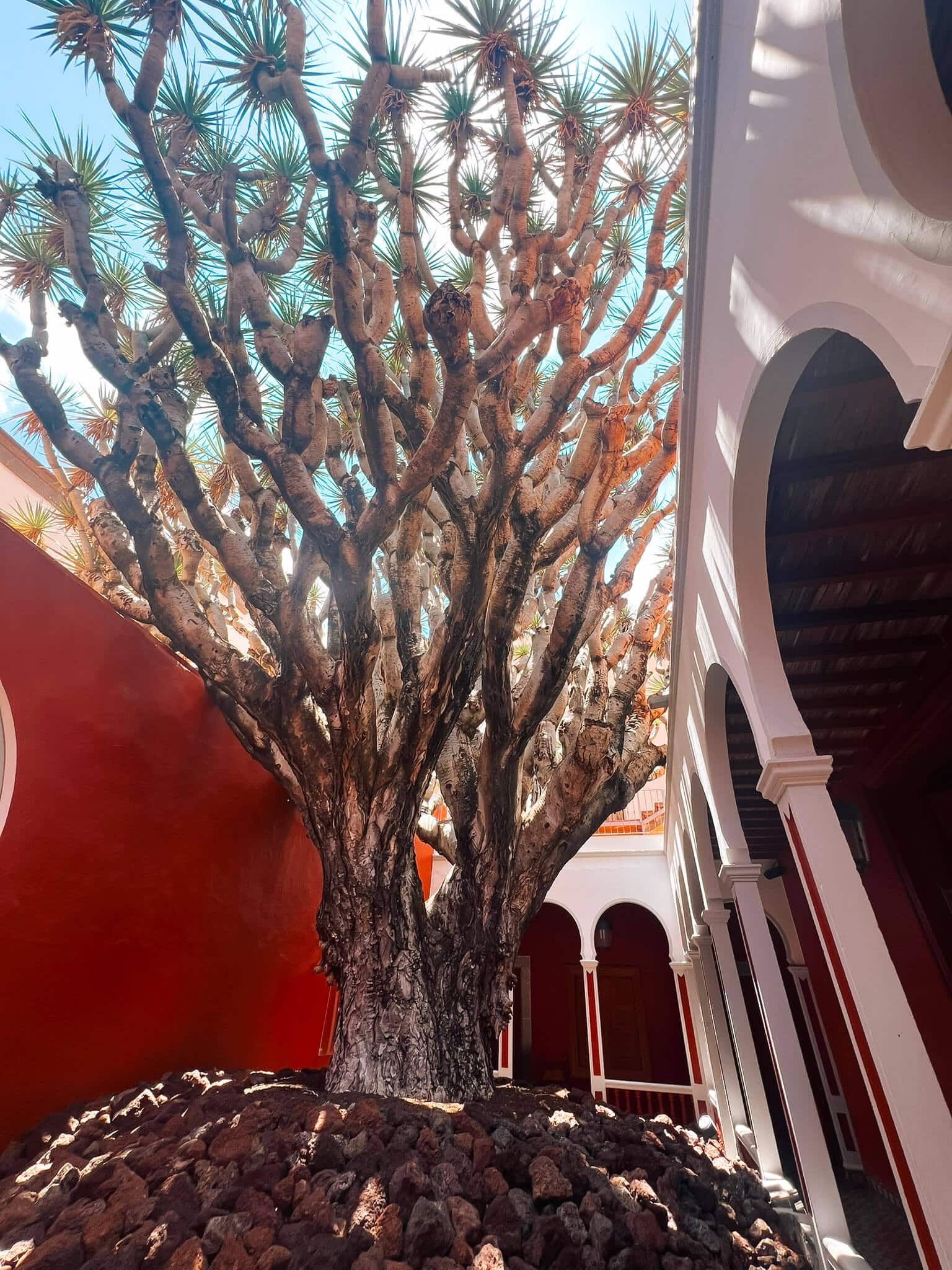
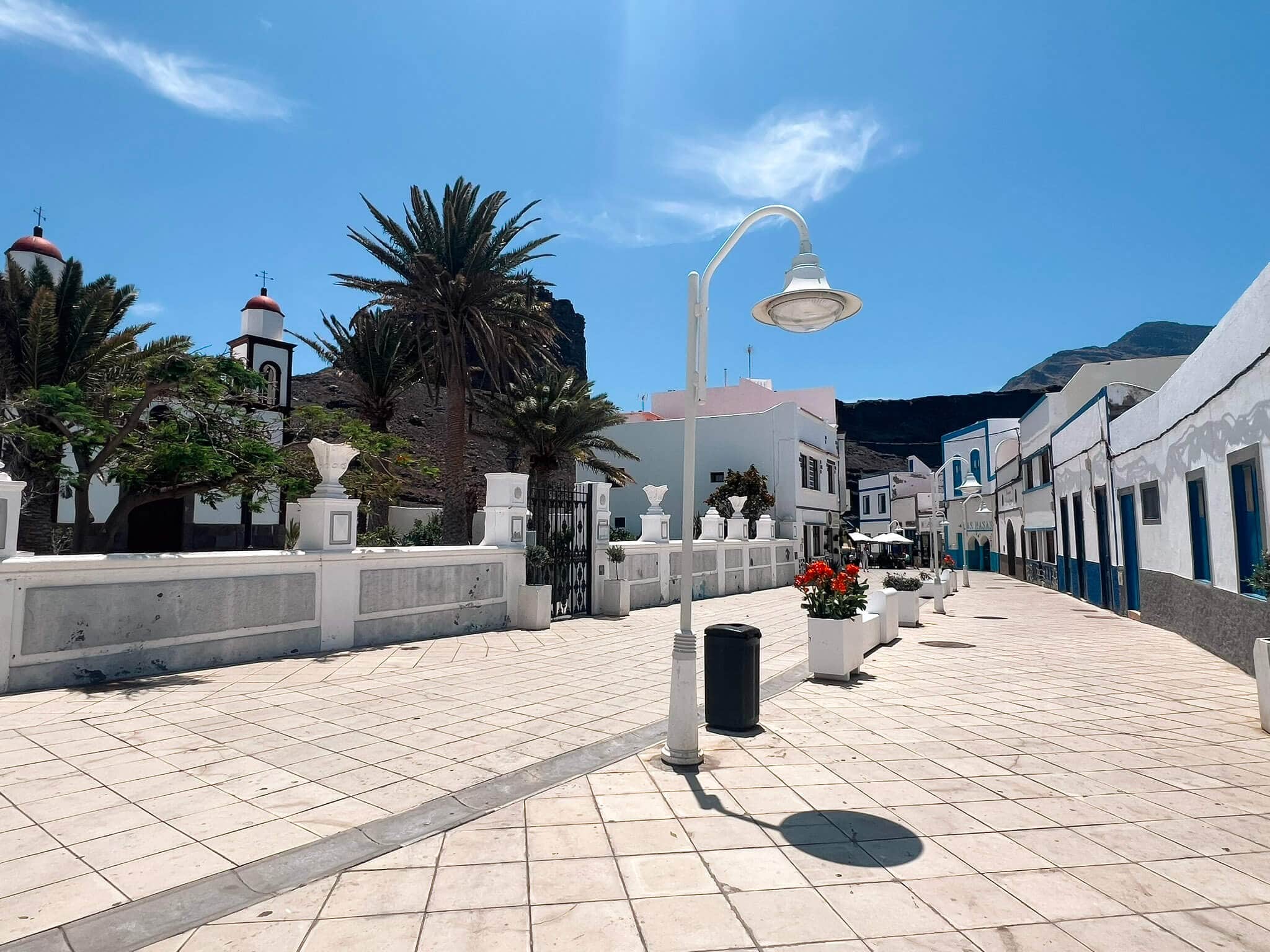
Gran Canaria’s north felt even more traditional to me. Fewer tourists, more local life. Coming from La Orotava, I was managing my expectations for Arucas. But it was painted in every colour, with a huge volcanic-stone church, and it felt like a real town, not a postcard. Gáldar felt like the most authentic town on the island: we went into the town hall courtyard for free to see its dragon tree, planted around 1718 and considered the oldest on the island, then had tapas in a local bar for €5.50. And the green Agaete Valley, where we found a coffee farm (more on that below), felt far away from the resorts.
What this means for your trip: if you want to experience traditional Canarian life on your first visit, I’d go for the north of Gran Canaria.
Food: eat in the villages, on both islands

In Tenerife, our best meals were in guachinches: simple home-cooked food, with red and green mojo sauces on wrinkly potatoes. Simple ingredients, incredible flavour. In the south, most restaurants are international (Italian, steakhouses, “Mediterranean fusion”), and that was a disappointment.

In Gran Canaria, our best meal was on the rooftop of Hotel Emblemático Arucas. I expected a tourist trap, especially as we arrived early and it was still empty. But the view goes straight over the church, and my revisited burger was maybe the best thing I ate in the whole Canary Islands. In Meloneras, it was the opposite: the €55 hotel buffet wasn’t worth it, and the promenade restaurants were expensive.
What this means for your trip: on both islands, the food gets better and cheaper as soon as you leave the southern resorts.
Teide cable car and stargazing: two lessons learned
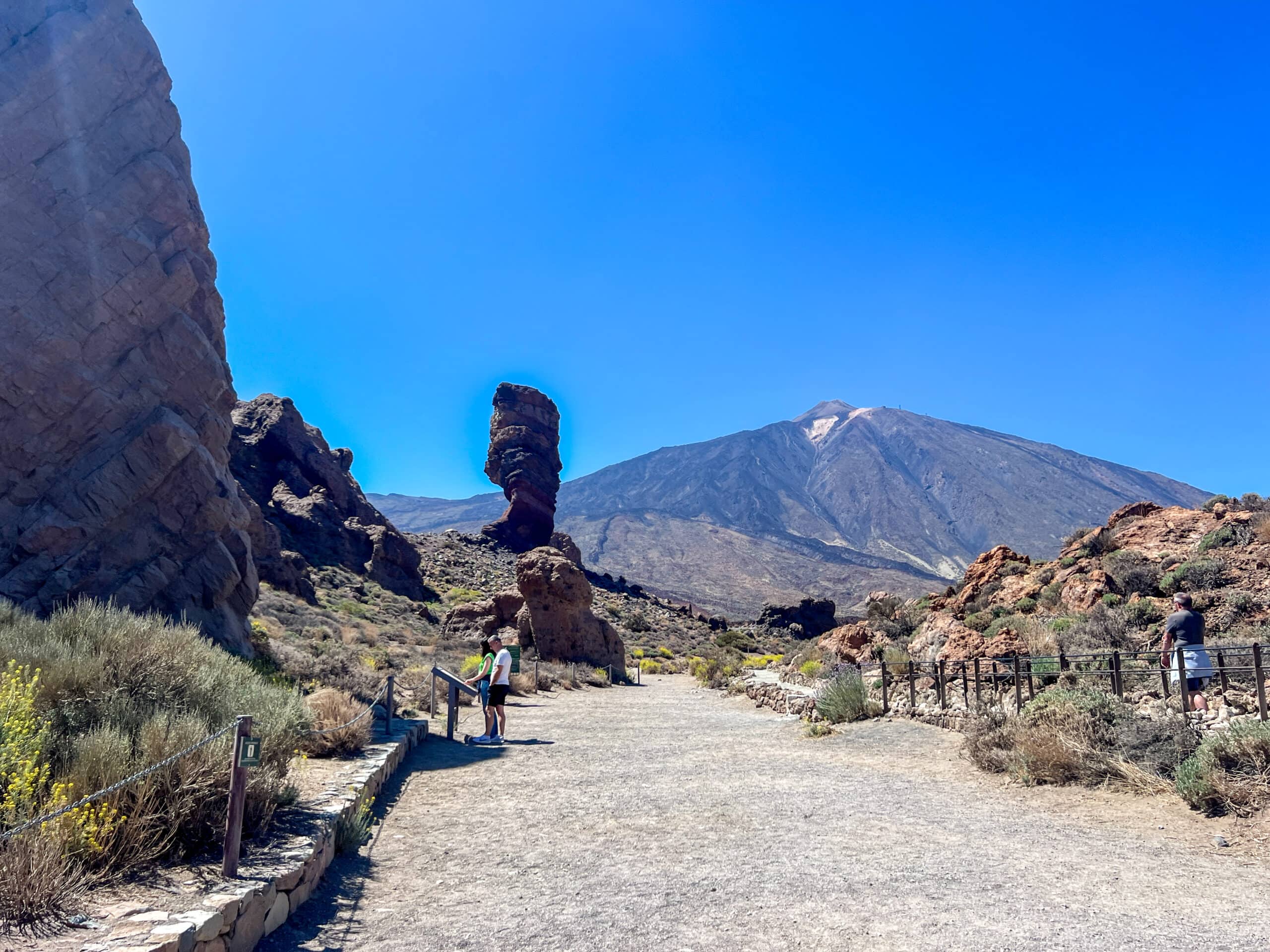
Lesson 1: book the Teide cable car as soon as you book your flights. Ours was cancelled 2 days before because of the weather, and it was impossible to find new tickets. We missed it, and I still regret it. More in my Teide National Park guide.
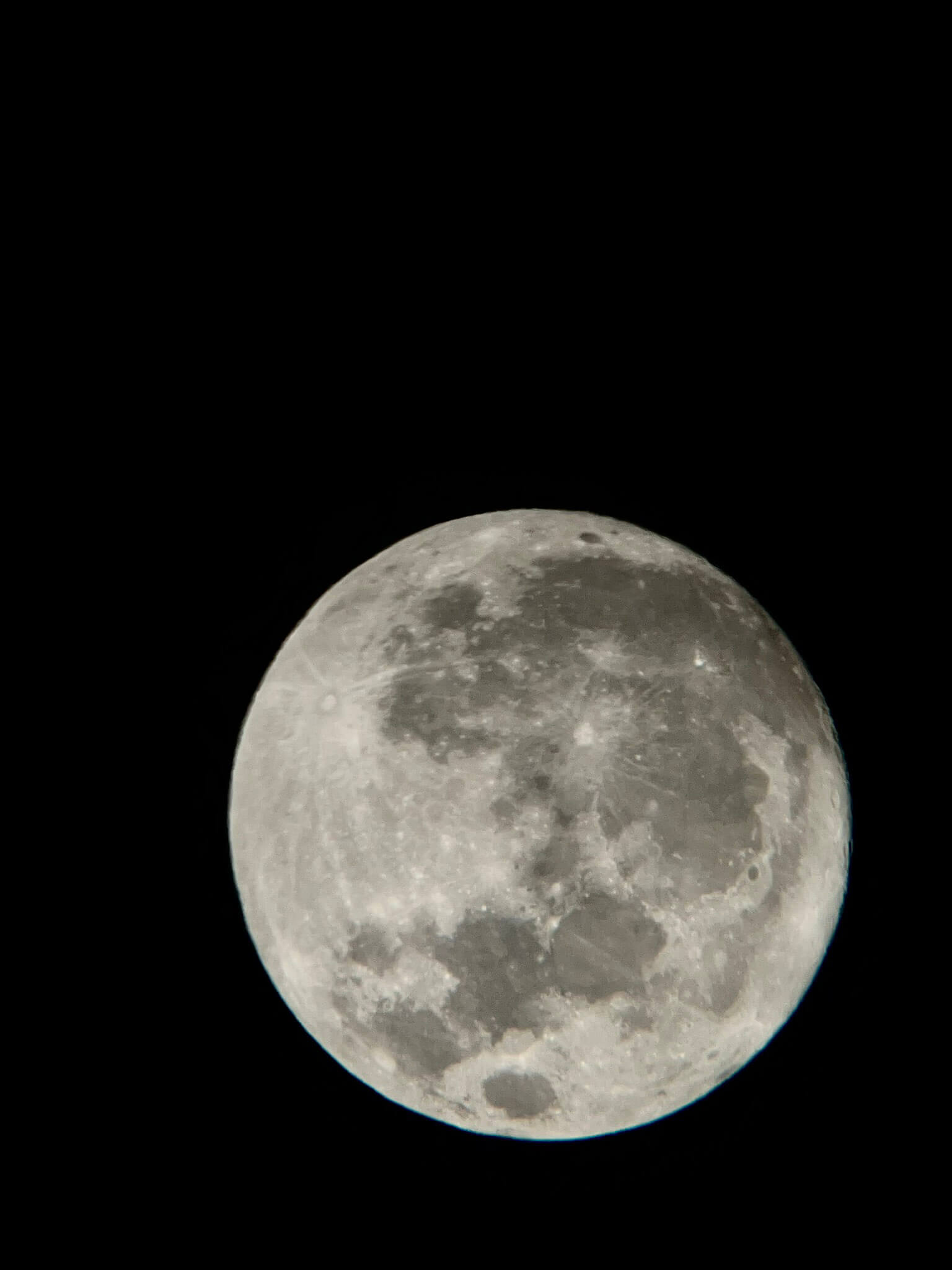
Lesson 2: check the moon before booking a stargazing tour. Because of the cable car, we didn’t do stargazing in Tenerife, so we did it in Gran Canaria, above the clouds, with a telescope and hotel pickup. The moon was out that night, so we saw far fewer stars. My phone photo of the moon through the telescope is incredible, but next time, I’d pick a date close to the new moon.
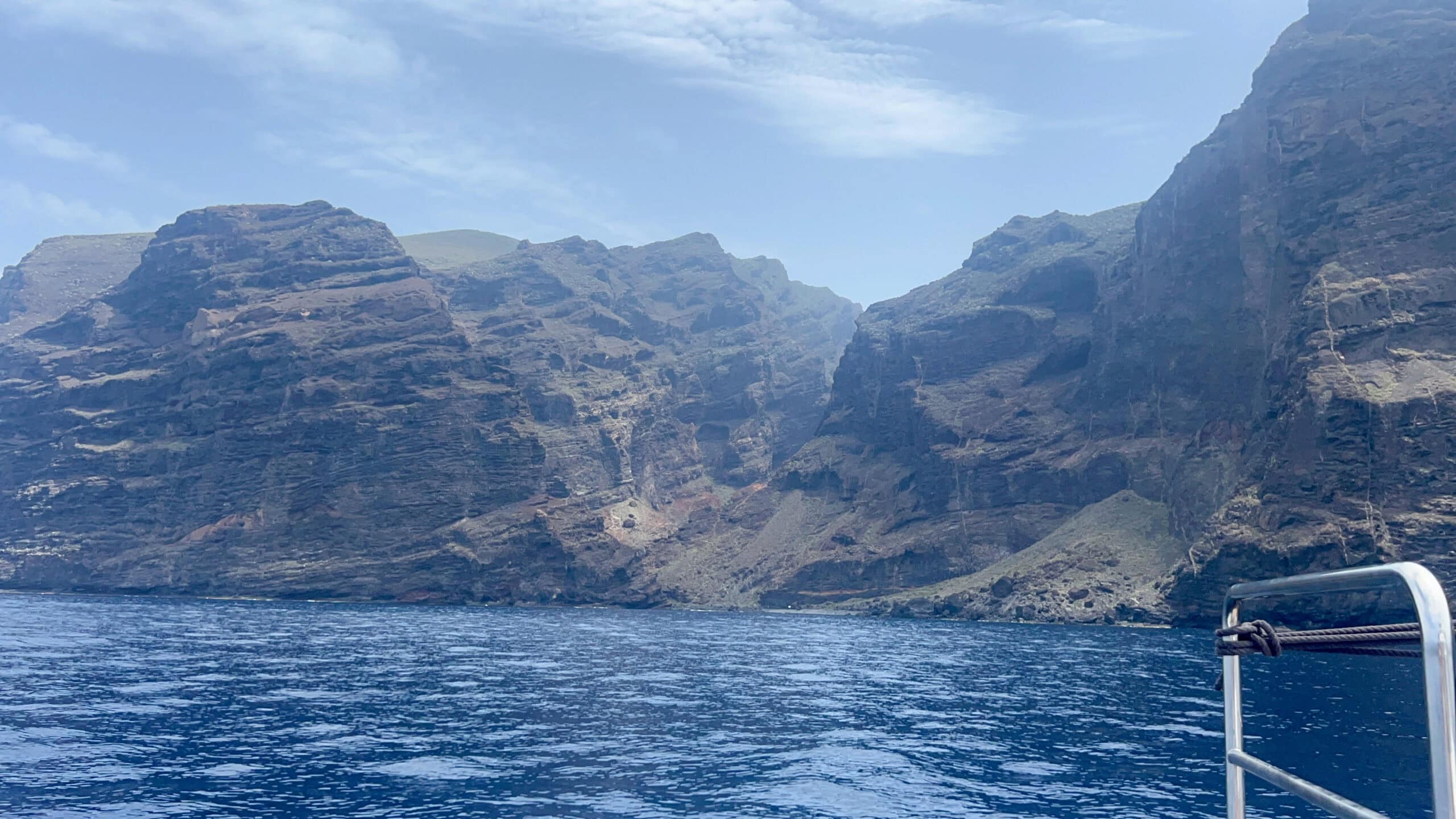
Unique experiences: in Tenerife, we saw dolphins and pilot whales on a boat trip. In Gran Canaria, we tasted banana liqueur on a plantation, and we visited a coffee farm in the Agaete Valley, my favourite moment of the whole trip.
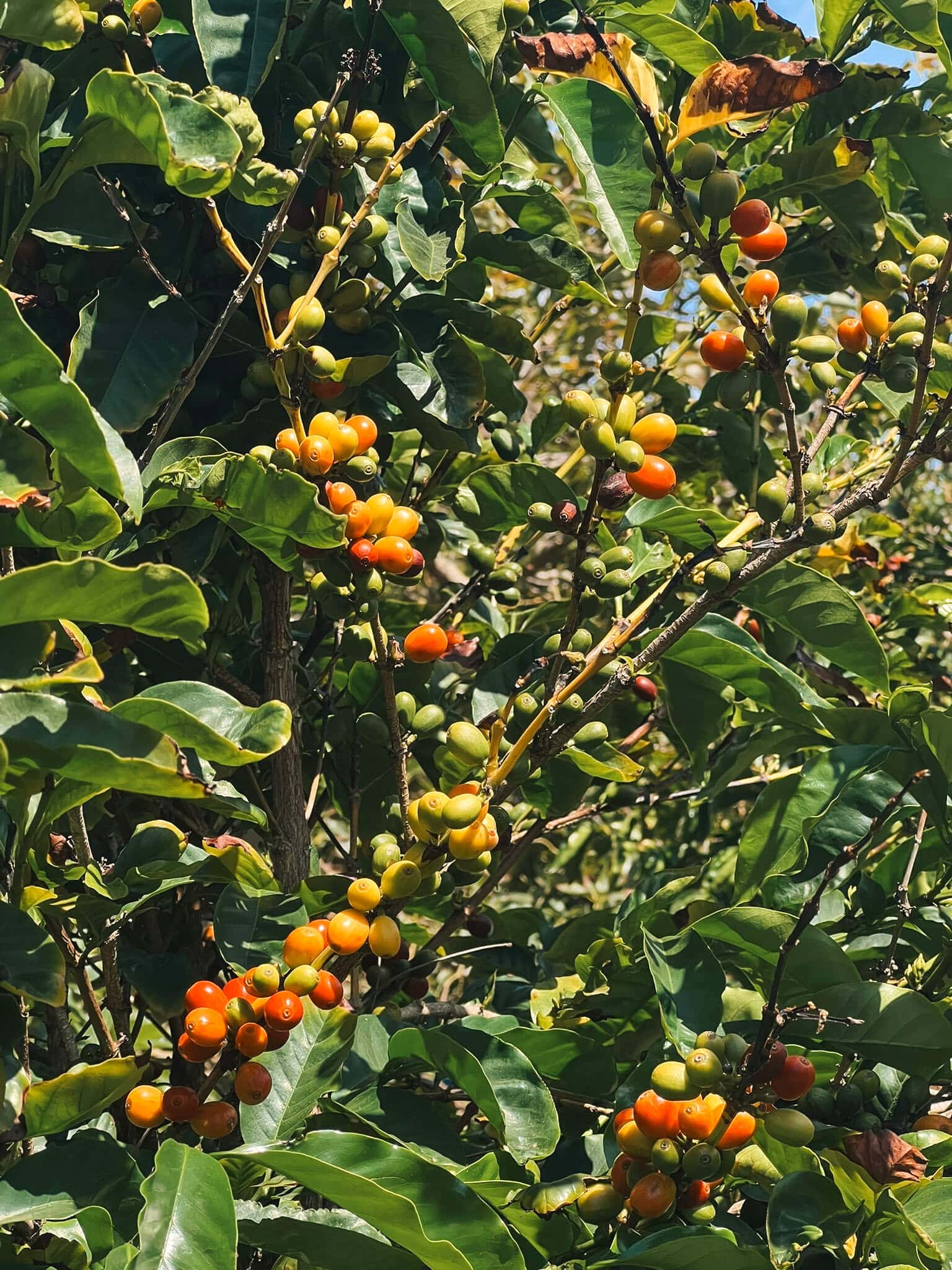
Why that one? First, the setting: Finca Los Castaños is tucked in a green valley, surrounded by mountains. If heaven had an image, it would be this. Then, the owner herself showed us around, and she was so passionate. She explained the whole process, from the plant to the cup. We saw the red coffee cherries on the trees and the beans drying in the sun, and learned that they grow oranges, mangoes and avocados too. At the end, we tasted their own coffee, and left with a bag of it and a coffee spread for our breakfasts. I had no idea coffee was grown in the Canary Islands. Nothing in Tenerife felt that personal.
Hotels and prices: our experience
I can only compare the two hotels we stayed in, not the whole islands. So here’s exactly what we had.
| Tenerife | Gran Canaria | |
| Our hotel | Hotel Colón Guanahaní, Costa Adeje (my review) | Lopesan Costa Meloneras, Meloneras (my review) |
| Price | €190 per night, simplest room | Higher than our Tenerife hotel, and more than I expected |
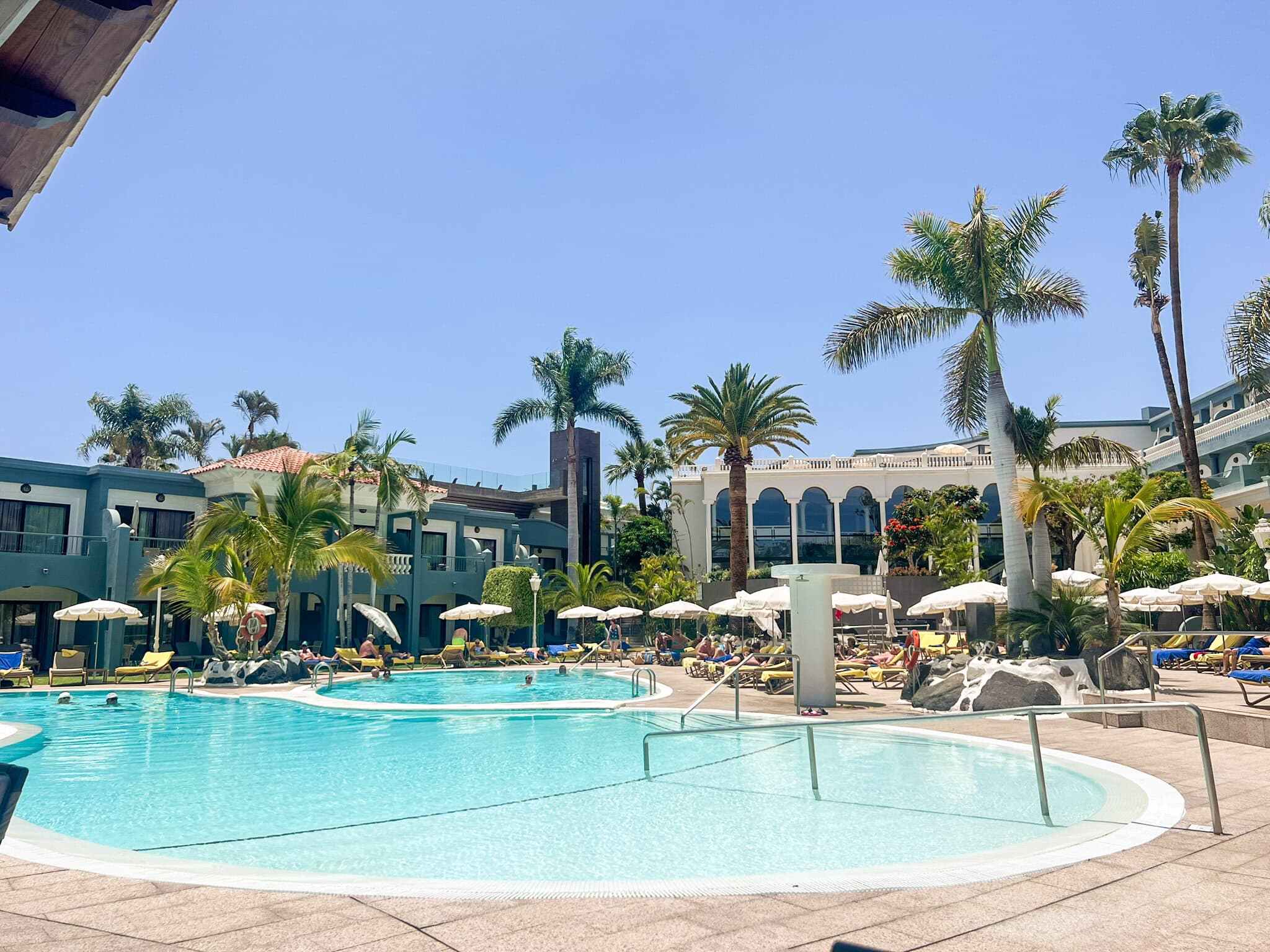
| Style | Boutique hotel, plants everywhere, rooftop pool | Huge resort, beautiful pools and gardens |
| The downside | Parking | Parking, and a €55 buffet dinner that wasn’t worth it |
| Restaurants around | International in the south, better in the north | Expensive in Meloneras, great value in the villages |
What did we get for the money? In Costa Adeje, a beautiful, human-sized base. We could walk out to eat or to the beach, and come back to a rooftop pool. In Meloneras, real luxury: pools everywhere, palm gardens, the promenade at the door. But also queues in the lobby, a fight for parking, and a resort of about a thousand rooms.
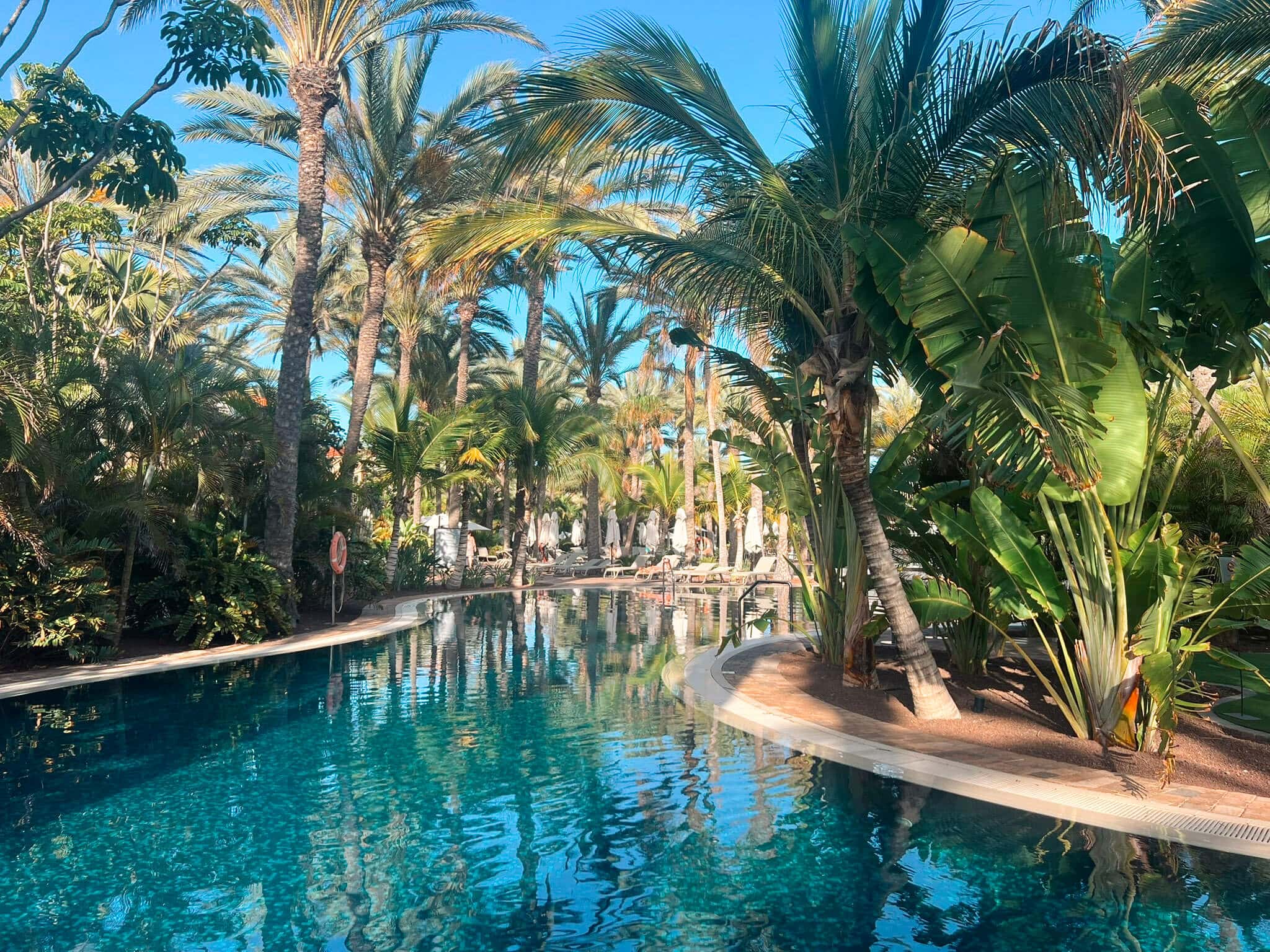
Which would I choose? It depends on the trip. To explore the island every day, a smaller hotel like ours in Costa Adeje makes more sense: you’re out all day, so you don’t use the resort. For a relaxing holiday by the pool, the Lopesan resorts are hard to beat.
More in where to stay in Tenerife and where to stay in Gran Canaria.
Getting around: Gran Canaria is easier
Driving was never a real problem for us on either island. But it doesn’t feel the same.
On the coast, both islands have fast motorways, and you move quickly. In the mountains, the roads are narrow and winding, you drive slowly, and you stop at every viewpoint. That’s where the time goes.
Gran Canaria felt easier. It’s round, with the fast road along the coast, and most places were under 1h15 from our hotel. Our longest day, in the north, had almost 3 hours of driving, but it all fitted in well because we had booked our visits in advance. The mountain road to Tejeda is very winding: if you get car sick, plan breaks.

Tenerife had the more tiring driving days. The island is bigger, and the mountain roads are steeper. The weather can also change completely on the way: from sun to thick fog in an hour. Some mountain roads made me close my eyes! If steep roads stress you, choose a base close to what you want to see, or join a tour for the most dramatic ones.
Parking was our only real problem on both islands, at our hotels more than in the towns.
What the car changed for us: on our north day in Gran Canaria, we did the coffee farm, Puerto de Agaete, Gáldar and the banana plantation, all in one day. Without a car, that would have taken two or three organised tours.


Your rental car for the Canaries
On both islands, the best places are spread out and buses are limited. We rented a car to explore at our own pace, and picked it up at the airport in Gran Canaria.
Without a car? Based on our experience, I’d lean towards Tenerife. We used public transport there once: a bus from Santiago del Teide to Erjos, to start the Masca hike. In Gran Canaria, we didn’t try the buses, and the places we loved most (the Agaete Valley, Tejeda, the banana plantation) felt like they’d need a car or an organised tour.
How many days do you need on each island?
These are based on our own itineraries, not fixed rules.
Tenerife:
- 5 days: you’ll have to prioritise, and these will be full days, not lazy ones: Teide, one big hike like Masca, one day in the north (La Orotava and Garachico), and a beach day. Depending on where you stay, that’s a lot of driving.
- 7 days: more breathing room for the north and a second hike, or the Anaga mountains.
- 9 days (what we did): Teide, 4 hiking days, the northern towns, beaches and a boat trip, at a comfortable pace. And I still wished we had more. Here’s our 9-day Tenerife itinerary, which you can shorten to 5 or 7 days.
Gran Canaria:
- 5 days (what we did): enough for the highlights by car without feeling rushed: the dunes, Puerto de Mogán, Tejeda, the north with the coffee farm, and Las Palmas on the last morning. Here’s our exact 5-day itinerary.
Why the difference? In Tenerife, hikes take whole days, and the island is bigger. In Gran Canaria, most of our visits took 1 to 3 hours, so we could combine several in one day.
What might disappoint you on each island
Tenerife might disappoint you if:
- you expect endless golden beaches (most are black sand)
- you only stay in the south: the restaurants there are mostly international
- you don’t book the Teide cable car early enough
- you have only 5 days: you’ll have to choose between hiking, Teide and the north
Gran Canaria might disappoint you if:
- you stay in the resorts and never leave: Meloneras and Playa del Inglés aren’t the real island
- you expect Teide-level drama
- you’re on a tight budget in Meloneras
- you want to explore without a car
Which island is better for your trip?

| If you are… | Choose… |
| A first-time visitor with a week or more | Tenerife |
| A first-time visitor with only 5 days | Gran Canaria |
| A beach lover | Gran Canaria |
| A hiker | Tenerife |
| Looking for traditional Canarian life | Gran Canaria (the north) |
| Travelling without a car | Tenerife |
| Looking for a luxury resort | Gran Canaria (Meloneras), if the budget allows |
| A couple who wants beaches and exploring | Both work: Tenerife for adventure, Gran Canaria for a shorter mix of everything |
| Lucky enough to have two weeks | Both! |
Can you visit both islands on one trip?
Yes, and I recommend it.
By ferry, the crossing from Santa Cruz de Tenerife to Agaete, in the north-west of Gran Canaria, takes about 1h20. Add the time to reach the ports: Agaete is about 1h15 from the resorts in the south of Gran Canaria. By plane, there are short inter-island flights.
We flew, but only because the ferry was so expensive when we booked. Otherwise, I would have chosen the ferry: you arrive right next to the Agaete Valley, one of my favourite places in Gran Canaria.
My verdict: Tenerife (with one condition)
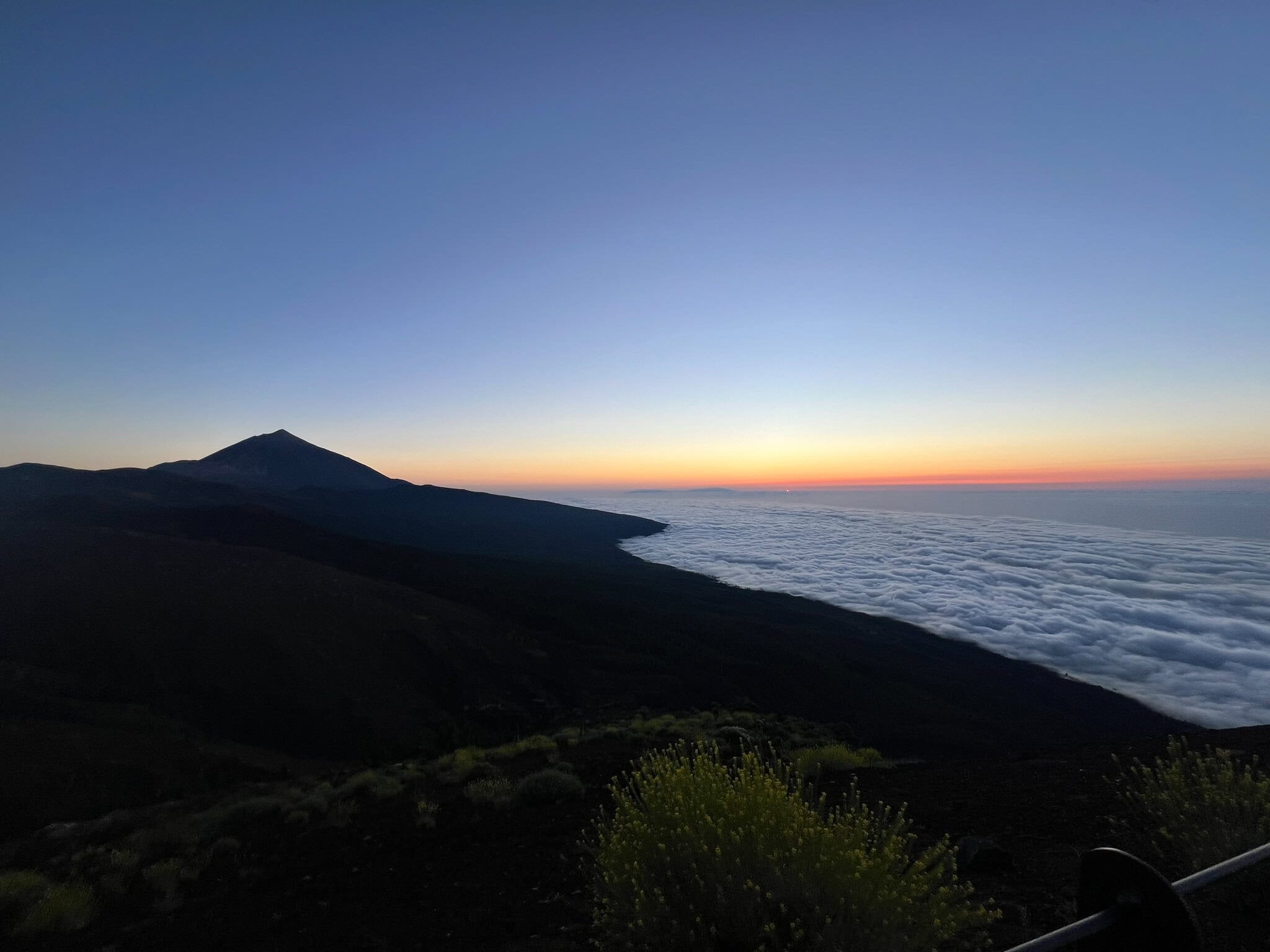
If you can only visit one island, I’d choose Tenerife. Mount Teide, the Masca trail and the north gave us the most unforgettable days of the trip. It’s the island that surprised me the most.
The condition: don’t spend your holiday at the beach. Tenerife is worth it if you explore it, and you’ll need at least a week.
But choose Gran Canaria if you have only 5 days, if beaches matter most, or if you want the most traditional Canarian north.
Ready to plan your trip?
- Chose Tenerife? Follow my 9-day Tenerife itinerary, with our day-by-day plan from a single base in the south.
- Chose Gran Canaria? Follow our 5-day Gran Canaria itinerary by car, and pick your favourites in the best things to do in Gran Canaria.
- Doing both? Start with Tenerife, then take the ferry to Agaete.
Frequently asked questions
Is Gran Canaria less touristy than Tenerife?
Both have big resort areas in the south. But in my experience, the north of Gran Canaria (Arucas, Gáldar, the Agaete Valley) felt more traditional and less visited than the north of Tenerife.
What should you book in advance on each island?
In Tenerife, the Teide cable car, as early as you can: tickets sell out weeks ahead in summer, and ours was cancelled anyway because of the weather. In Gran Canaria, we booked the coffee farm visit, the banana plantation tour and the stargazing tour about 3 to 4 weeks before the trip, and it was fine.
Is the ferry between Tenerife and Gran Canaria worth it?
Yes, if the price is right. The crossing takes about 1h20 and arrives in Agaete, close to the Agaete Valley. We flew only because the ferry was too expensive when we booked.