


Collioure is the cuttest coastal town in the South of France, that is still a hidden gem.
It’s small. It’s stunning. And it fills up fast.
The first time I arrived in Collioure, I understood why French people keep this place to themselves.
Sitting right on the border between France and Spain, this seaside town feels like nowhere else in France. The architecture is a mix between French and Catalan, the food screams Spain-meets-France, and the prices… reflect just how special this little corner is.
I’ve been to Collioure twice now. The first time was right after my wedding for a honeymoon weekend, and again for a girls’ trip with my best friend.
Each time I visited, I loved Collioure even more. I also picked up new tips for enjoying it without getting stuck in crowds or touristy spots.
Most travelers don’t realize that Collioure is in the French Catalan region, so close to Spain you can taste it in every bite of tapas. The French often take classic Spanish dishes and add their own twist. It’s definitely worth trying.
But planning a trip here? That’s where people struggle.
The town is small, so places to stay are limited and can be pricey. Many hotels feel a bit old. The beaches are crowded in summer. If you visit at a busy time, you might find yourself surrounded by tourists instead of enjoying the Mediterranean views.
After 10+ visits to southern France over eight years of living in Toulouse (just three hours away), I’ve figured out the best way to experience Collioure. I know where to stay outside town for better value, which restaurants actually deliver on their views, and how to time your visit to see the old town bathed in perfect light.
This post shares everything I wish I had known before my first visit: real recommendations, honest prices, and insider tips to help make your trip unforgettable.


This Post in Short
Best base: Port-Vendres or Argelès-sur-Mer for better value (15 minutes from Collioure by train)
Stay outside Collioure proper—the hotels are newer, cheaper, and you’re only five minutes away by train.
Favourite hotels: Le Relais Des Trois Mas, Les Jardins du Cèdre (in Port Vendres), Le Cottage (In Argéles)
Best time to visit: Late May to early June or September to avoid summer crowds while keeping warm weather
Must-see highlight: The walk from the main port to the lighthouse
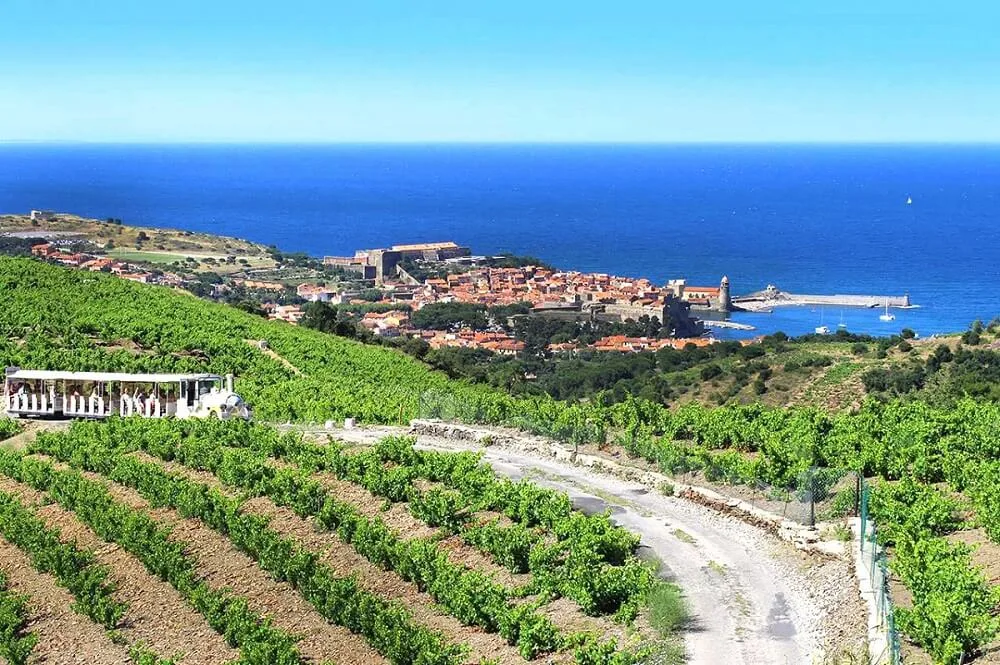
Hidden gem: Fort Saint-Elme overlooking the vineyards and sea (take the little tourist train up)
Best photo spot: Chapelle Saint-Vincent for three different angles of the old town
Best restaurant: La Treille Tapas for the most incredible tapas in a cozy, light-strung alley
Best unique experience: Walking the Sentier du Littoral from Port-Vendres to Collioure (40 minutes of coastal beauty)
Getting there: Train to Narbonne, then TER train to Collioure (multiple per day). Alternatively, fly to Perpignan, Montpellier, or Barcelona.


I’m Ersilia – architect and travel lover
📍 Based in Toulouse, I’ve been uncovering castles, villages & hidden gems for years — and I share the ones I truly love.
✨ Get my Paris Restaurants Map 🍷🥖
✨ Plus, download my Free Guide to the Loire Valley, Dordogne & Provence — with the best castles, villages, and slow travel tips I recommend
Want me to plan your trip? Details here
Where is Collioure and How to Get There
Collioure is located the Pyrénées-Orientales department in southern France, practically touching the Spanish border.
You’re in French Catalonia here, a unique corner where French sophistication meets Spanish warmth. The architecture reflects it, the locals embody it, and the food celebrates it.

The easiest way to reach Collioure is by train. Take a main line train to Narbonne, then switch to the regional TER train to Collioure. Trains run multiple times per day, and the journey from Narbonne takes about an hour.
If you’re flying in, your closest airports are:
- Perpignan (30 minutes away)
- Montpellier (2 hours)
- Barcelona (2.5 hours)
- Toulouse (3 hours)
From any of these, you’ll connect through Narbonne to catch the TER to Collioure.
If you miss your connection in Narbonne (like my friend did), a taxi to Collioure costs around €50 and takes 40 minutes. Not ideal, but it happens.
The beauty of Collioure is that the train that goes to the coast has the most amazing views, as it passes in a bay where cars don’t have access. The last time I was there, I got lucky and caught the sunset. This is the view from my window train!

Collioure makes a perfect two-day trip from Toulouse or Barcelona.
And if you’re planning a bigger adventure, it combines beautifully with the French Pyrenees. You can easily create a week-long itinerary between mountains and the Mediterranean.
If you’re already exploring southern France, Collioure is an easy addition to trips to the French Basque Country or the Dordogne.
Where to Stay in or Around Collioure
To be honest, I’ve never actually stayed IN Collioure.
Both times I visited, I chose to stay outside town. The reason? Prices in Collioure are high, and most hotels feel dated for what you’re paying.
There is one hotel I would make an exception for: Le Relais Des Trois Mas.


The rooms and pools look out over the old town, and the views are amazing. But every time I’ve tried to book, it’s already full. It seems everyone knows about this place.
So instead, I’ve stayed in two nearby towns that offer better value, newer accommodations, and easy access to Collioure.
Port-Vendres (My Honeymoon Choice)

Les Jardins du Cèdre became my favorite boutique hotel discovery during my post-wedding weekend.
It sits on a hill just outside Port-Vendres, with views over the entire bay. From our room and the pool area, we could see straight to the port below. The setting felt impossibly romantic.
The hotel is 15 minutes walking from the train station and has free parking if you’re driving.
They offer two types of rooms—newer modern ones and slightly older versions. We took the older rooms to save money, and honestly, they were still lovely.
Every room has a balcony overlooking the bay.
 the view from our room
- view over Port Vendres from the Pool
- the breakfast view


Breakfast here deserves its own paragraph. They serve it on a beautiful terrace with metallic French furniture shaded by trees. The buffet includes freshly made pancakes, and the whole vibe screams “French countryside elegance.”
The terrace doubles as a restaurant that’s well-known locally. We ate there our last evening—a three-course meal that didn’t disappoint.

see more photos of Les Jardins du Cèdre hotel
From Port-Vendres, you have three options to reach Collioure:
- Walk the coastal path (one hour on the Sentier du Littoral)
- Take the train (five minutes)
- Grab a taxi
We walked to Collioure via the coastal path and took the train back. Best decision.
Port-Vendres itself is a charming fishing port with several waterfront restaurants. We had an unforgettable seafood dinner at Chez Pujol.
Since it was a special occasion, we ordered the Plateau du Capitaine—a massive seafood platter for two that we’re still dreaming about.

Argelès-sur-Mer (The Girls’ Trip Base)
For my second visit, my friend and I stayed in Le Cottage, a boutique hotel in the old part of Argelès-sur-Mer.
This place was a hidden gem.
Beautiful pool, spacious rooms, spa options, and a gorgeous breakfast terrace. The price was also significantly better than anything comparable in Collioure.


From the hotel were five minutes from the town center and 25 minutes on foot from the beach.
There’s a bus connecting them, but we enjoyed the walk (though it’s not particularly scenic).
Argelès-sur-Mer feels like two different towns.
The old town has cute streets and cafés with character. The beachfront is more like a typical resort.
It has promenades lined with beach shops and swimwear stores. Neither is architecturally stunning, but the nature around here is beautiful.
We tried walking to Collioure from the seaside but didn’t manage it.
The path isn’t well-marked this direction and feels harder. I recommend taking the train or a taxi instead.
Like Port-Vendres, Argelès is just minutes from Collioure by train.


What to do and see in Collioure
Walk around the Old Town


Start here. Just wander.
Collioure’s old town is full of narrow streets with colorful buildings in pink, yellow, and orange. There are great views around every corner, but it’s worth putting your phone away for a moment to take it all in.
The centerpiece is the Church of Notre-Dame-des-Anges, with its distinctive tower sitting literally on the sea.

The tower was originally built as a lighthouse or beacon at the port entrance. It’s one of those architectural quirks that makes Collioure so unique.
This isn’t a place to rush through or check off a list. It’s better to wander, get a bit lost, and end up by the water, amazed that such a small town can feel so special.

Stroll the Port to the Lighthouse
From the main port, head left toward the lighthouse.
This walk might be my favorite thing about Collioure. The scenery changes dramatically every few steps.


You’ll pass the Passerelle de la Chapelle, which is a small walkway on the water, before you reach Chapelle Saint-Vincent. This is a good spot to stop and turn around. You’ll see views in three different directions, each one unique.
Keep walking to the lighthouse itself. The view back toward the old town is incredible. You can see the entire village framed by the Mediterranean, with colorful fishing boats bobbing in the foreground.
The walk takes about 20 minutes at a leisurely pace.
Walk to Plage Saint-Vincent (The Game of Thrones Beach)
From the main port, go right this time.
You’ll walk along the walls of the Château Royal de Collioure, and it really does feel a bit like Game of Thrones. If you’ve visited Dubrovnik, you’ll notice a similar atmosphere.


This path takes you to Plage Saint-Vincent, a small beach framed by colorful houses. Look up toward the hill, and you’ll spot Fort Saint-Elme sitting at the top like a guardian.
This beach is less crowded than the main one in town, though “less crowded” is relative in summer. The views are worth it regardless.
The entire walk takes about 15 minutes from the port.
Visit the Château Royal de Collioure

The royal castle has seen centuries of Franco-Spanish border conflicts.
More recently, its barracks served as a prison during the dark episodes of the 20th century. Walking through this fortress, you feel the weight of that history.
The visit takes about an hour. The views from the ramparts looking out to the sea are beautiful and make the entrance fee worthwhile.
Practical info:
- €9 for adults
- Free for kids
- Free for EU visitors under 26 years old
The castle sits right in the old town, impossible to miss. Go early in the day to avoid the heat and get the best light for photos. This place is never crowded.
Take the Tourist Train to Fort Saint-Elme

Fort Saint-Elme started life as a watchtower in the eighth century.
Now it sits high on the hill overlooking Collioure, the vineyards, and the sea. The interior isn’t open to the public anymore, but the view from up there makes the trip worthwhile.
Take the little tourist train. It may be touristy, but it saves you from a steep climb and the ride has great views.
for exact information, check the official website
Tourist Train Schedule (April 12 – June 30 & September 1 – November 2, 2026):
- Open daily: 11am-12pm and 2pm-5pm
Prices:
- Adults: €10
- Groups: €7
- Children (up to 11 years): €6
- Children (0-3 years): Free
The train departs from the old town. Ask at the tourist office for current departure times.
Shop in the Artisanal Boutiques

The streets of Collioure hide some wonderful artisan shops.
I bought a linen shirt from a local designer that I still wear constantly. My friend found a painting by a local artist that now hangs in her living room.
These are not the usual tourist souvenir shops you see in bigger French cities. Instead, real artisans sell quality items like clothing, art, ceramics, and jewelry.
Budget time to browse. You might find something special.
Take a Vineyard Tour with Tastings
The region around Collioure is covered in vineyards.
You’ll spot them right away if you arrive by car or taxi: terraced vines climb the hillsides, with some reaching all the way down to the sea.
The local wines have their own AOC (Appellation d’Origine Contrôlée) and deserve attention.
Several vineyards offer guided tours with tastings, where you’ll learn about the unique terroir and winemaking techniques specific to this coastal region.
Book in advance during the summer. Tours typically last 1-2 hours and cost around €40 per person.
book your vineyard tour in Collioure
Take a Private Boat Tour

Want to see Collioure from the water?
Private boat tours take you along the coast with a local skipper, showing you Collioure, Port-Vendres, and Cap Bear from the Mediterranean. Tours typically accommodate up to four people.
You’ll see hidden coves, dramatic cliffs, and the coastline from an entirely different perspective.
Some tours include swimming stops in quiet bays that are inaccessible by land.
I recommend this tour that only takes 4 persons at a time, it’s definitely a private experience.
Relax on the Beach (Or Go to Argelès for More Space)

The main beach in Collioure is tiny.
In summer, the beach gets very crowded. Sometimes it’s hard to even find a spot for your towel.
If you’re visiting in July or August and beach time is important to you, head to Argelès-sur-Mer instead. The beaches there stretch for miles, giving you actual space to breathe.
But if you’re here in shoulder season (May-June or September), the Collioure beach is lovely. The water is clear, the views of the old town are gorgeous, and you might actually find a spot to claim.
Just manage your expectations in peak season.
Eat at a spanish-french restaurant, if possible with a view


I tasted several restaurants on both times that I was there, and these are my favourite ones:
Chez Simone
Tapas with a view—that’s the draw here.
Chez Simone overlooks the port, offering prime people-watching while you nibble on small plates. The tapas are good (not great, but good), and the location does most of the heavy lifting.
It’s a great spot for a casual lunch or an early evening drink. The food is good, but the real draw is the pleasant atmosphere and the views you came to Collioure to see.
Prices are reasonable for the location—expect to spend around €25-35 per person with drinks.
La Treille Tapas
This was the best meal I had in Collioure.
La Treille Tapas is located a small street inside the old town, away from the waterfront. No sea views here, but the atmosphere more than compensates.
The outdoor seating area has a festive feel, with lights overhead, cozy tables close together, and a lively crowd speaking several languages.
The tapas here are among the best I’ve eaten anywhere, in France or Spain. They take traditional Spanish small plates and elevate them just enough without losing their soul. This is “revisited tapas” done right.
Order multiple plates to share. The portions are generous, and you’ll want to try everything.
Book ahead if you’re visiting in summer. This place is popular with locals for a reason.
Expect to spend €30-45 per person with wine.

Restaurant Les Roches Brunes
When you want a fancy dinner, go here.
Les Roches Brunes delivers on both food and setting. The menu leans French with Mediterranean influences, and the execution is sophisticated without being pretentious.
It’s more expensive than the other recommendations, this is your splurge meal. But the quality justifies the price.
The dining room feels elegant, and the service is attentive in that distinctly French way. It’s a perfect place for celebrating something special (which is exactly what we did during our honeymoon weekend).
Budget €60-80 per person with wine.
Reservations essential, especially during summer.
La Voile

Best view in Collioure? Quite possibly.
La Voile sits right on the water, giving you unobstructed views of the old port and the sea. I sat here at sunset with a glass of local wine and their chimichurri tuna, and it ranks among the best restaurant moments I’ve had in France.
The food is good—not especially creative, but classic Mediterranean dishes done well. Honestly, the main reason to come is the setting.
Perfect for lunch or an early dinner to catch the sunset. The terrace fills up fast, so arrive early or book ahead.
Expect to spend €35-50 per person.
Walk the Sentier du Littoral from Port-Vendres


This coastal path was a highlight of my first visit.
The Sentier du Littoral connects Port-Vendres to Collioure along the cliffs and shoreline. It takes about 40 minutes at a relaxed pace, and every turn reveals another stunning view.
The path is well-kept and easy to follow. You’ll pass rocky coves, walk up gentle hills with wide views, and finish at Collioure’s old town ready for some tapas.
We walked this direction (Port-Vendres to Collioure) and took the train back. The path is prettier this way, and ending in Collioure means you arrive ready to explore and eat.
Wear comfortable shoes. It’s not difficult, but you’re walking on rocky paths. Bring water, especially in summer.
Start early in the morning for cooler temperatures.
How Much Time Do You Need in Collioure?
Two full days is perfect for Collioure itself.
Day one: explore the old town, walk to both beaches, visit the castle, and have a long lunch overlooking the port.
Day two: take the tourist train to Fort Saint-Elme, browse the artisan shops, squeeze in a vineyard visit, and watch sunset from a waterfront restaurant.
If you’re staying in Port-Vendres or Argelès-sur-Mer (like I recommend), add time to explore those towns too. They’re charming in their own right and deserve more than just being your base.
Planning a longer trip? Combine Collioure with the French Pyrenees for a week of mountains and Mediterranean. Or make it part of a broader southern France adventure including Provence or the French Basque Country.
Or check out the best 18 destinations that I recommend visiting in summer in France.
When to Visit Collioure
Best times: late May to early June or September.
You’ll enjoy warm Mediterranean weather without the heavy summer crowds. The beaches are good for swimming, restaurants have open tables, and you can explore the old town without feeling packed in.
July and August are peak season. Everything is open, the weather is guaranteed to be beautiful, but expect crowds and higher prices. The main beach becomes uncomfortably packed.
April and early May are lovely but cooler. Water is too cold for most people to swim, but the town is quiet and prices are lower.
October brings unpredictable weather but beautiful light for photography. Many restaurants close or reduce hours.
Avoid winter unless you’re specifically looking for an off-season escape. Many places shut down entirely from November through March.
How to Get Around Collioure
The old town is completely walkable—it’s tiny.
From end to end, you’re talking 15-20 minutes maximum. No need for any transportation within Collioure itself.
To get between Collioure and nearby towns (Port-Vendres, Argelès-sur-Mer):
- Train: Fast, cheap, frequent. The TER runs multiple times per day between these towns. A ticket costs just a few euros.
- Taxi: About €15-20 between towns. Useful late at night when trains stop running.
- Walking: The coastal path between Port-Vendres and Collioure is beautiful (40 minutes). The walk from Argelès is longer and not well-marked—skip it.
If you want to visit vineyards or go into the Pyrenees, having a rental car helps. But in Collioure itself, it’s best to leave the car and walk everywhere.
FAQ
How do you pronounce Collioure?
“Col-ee-oor” with the emphasis on the last syllable. The final “e” is silent, as typical in French.
Don’t stress too much—even if you mispronounce it, locals are used to tourists attempting French. They’ll appreciate the effort.
Is Collioure worth visiting?
Absolutely, especially if you’re looking for a Mediterranean coastal town that feels different from the French Riviera.
Collioure has a special mix of French and Catalan culture, great food, a beautiful coastline, and a size that’s easy to handle. It doesn’t try to be glamorous like Cannes or trendy like Saint-Tropez. It’s just itself.
Just know it’s small, it gets crowded in summer, and it’s not cheap. If those things don’t bother you (and you follow my tips for timing and where to stay), you’ll love it.
Can you visit Collioure without a car?
Yes, easily.
The train connects Collioure to Narbonne (and from there, to the rest of France). Regional trains run between Collioure, Port-Vendres, and Argelès-sur-Mer multiple times per day.
A car becomes useful only if you want to explore nearby vineyards or venture into the Pyrenees. For Collioure itself and the surrounding coastal towns, trains work perfectly.
How many days do you need in Collioure?
Two full days is ideal for Collioure itself.
This gives you time to explore the old town properly, visit both the Château Royal and Fort Saint-Elme, walk the coastal paths, browse artisan shops, and enjoy several meals overlooking the water.
If you’re staying in Port-Vendres or Argelès-sur-Mer (which I recommend), add an extra day to explore your base town. If you’re combining Collioure with the Pyrenees or other southern France destinations, 3-4 days in the area works well.
What is Collioure famous for?
Collioure attracted famous artists in the early 20th century, including Henri Matisse and André Derain. The light and colors here inspired the Fauvist movement.
Today, Collioure is famous for its colorful waterfront, the church tower by the sea, excellent anchovies (local anchovies are a real specialty), and sweet wines from nearby vineyards.
It’s also famous among French people as a beautiful but small coastal town that fills up quickly—hence why many keep it as their little secret.
Is Collioure similar to the French Riviera?
Not really, and that’s what makes it special.
The French Riviera towns lean glamorous and international. Collioure leans Catalan and intimate. The Riviera has grand hotels and yacht-filled marinas. Collioure has fishing boats and small beaches.
Think of Collioure as a more authentic, less polished cousin. Its beauty is different: more colorful, a bit quirky, and truly French-Mediterranean.
If you’re exploring both regions, check out my guide to the best French Riviera towns to see how they compare.
What are the best day trips from Collioure?
The French Pyrenees are close enough for day trips—you can visit mountain villages, hike gentle trails, or explore thermal towns.
Perpignan is 30 minutes away and worth a few hours for its Catalan culture and the Palace of the Kings of Majorca.
Several vineyards surround Collioure, offering tours and tastings.
Or head south into Spain—you’re so close to the border that Spanish coastal towns like Cadaqués or Roses make easy day trips.
For more southern France ideas, browse my guides to the Dordogne and Provence.
Final Thoughts on Visiting Collioure
Collioure isn’t trying to impress anyone.
It’s small, colorful, and unapologetically itself—a seaside town where French and Catalan cultures blend into something unique. The light changes throughout the day, painting those colored facades in different shades. The food tastes like the Mediterranean with a French accent. The beaches are tiny but the coastal paths are stunning.
I’ve been twice and I’m already planning my third visit.
Stay outside town to save money and get better hotels. Walk the coastal path at least once. Eat tapas at La Treille and save one sunset for La Voile. Visit outside peak summer if you can.
Most importantly, slow down. Collioure rewards wandering without a plan, discovering a hidden viewpoint, spending an extra hour at lunch watching fishing boats bob in the harbor.
The French keep this place secret for a reason. Now you’re in on it too.


author page / EDITORIAL POLICY PAGE
Hi, I’m Ersilia

Toulouse, France

Originally from Romania

English & French Content
As a Romanian expat living in the heart of southern France, I guide English speakers to discover authentic French experiences without the language barrier. My unique perspective as both a local and an expat allows me to share insider tips, cultural insights, and practical advice that you won’t find in typical guidebooks.
My Expertise:
- French life and culture navigation
- Hidden gems across French regions
- Eastern vs Western European perspectives
- Local insights and practical travel tips
Blog Socials
Personal Pages
Other topics you might like


